Warehouse automation buyer guide

Warehouse robots: every type, compared for real deployments

Warehouse robots now pick, transport, lift, store, sort and even walk. This guide maps the seven types, what each is for, who runs them at scale, and how the transport class compares robot by robot on manufacturer-sourced facts.

The taxonomy decision

The seven types of warehouse robots

Pick the category before the vendor. Each type solves a different job, and most automated warehouses run several side by side.

01

Person-to-goods picking

Collaborative picking AMRs

Robots meet pickers at the shelf, carry the totes and walk the long aisles so people do not. Locus Origin carries 36 kg for 14 hours per charge; Locus AMRs passed their seven billionth pick in March 2026, and DHL alone has crossed one billion picks across 40+ sites.[LR4][LR5][LR1][LR2]

Examples: Locus Origin, Locus Vector

02

Point-to-point material movement

Transport AMRs and tuggers

Free-navigating robots move carts, cases and pallets between zones. MiR250 carries 250 kg through gaps as narrow as 80 cm; Seegrid's Tow Tractor S7 tows 10,000 lb and the fleet has logged 20 million+ autonomous miles with zero reportable safety incidents.[MIR1][SG1]

Examples: MiR250, Seegrid Tow Tractor S7

03

Pallet pickup, lift and stack

Autonomous forklifts

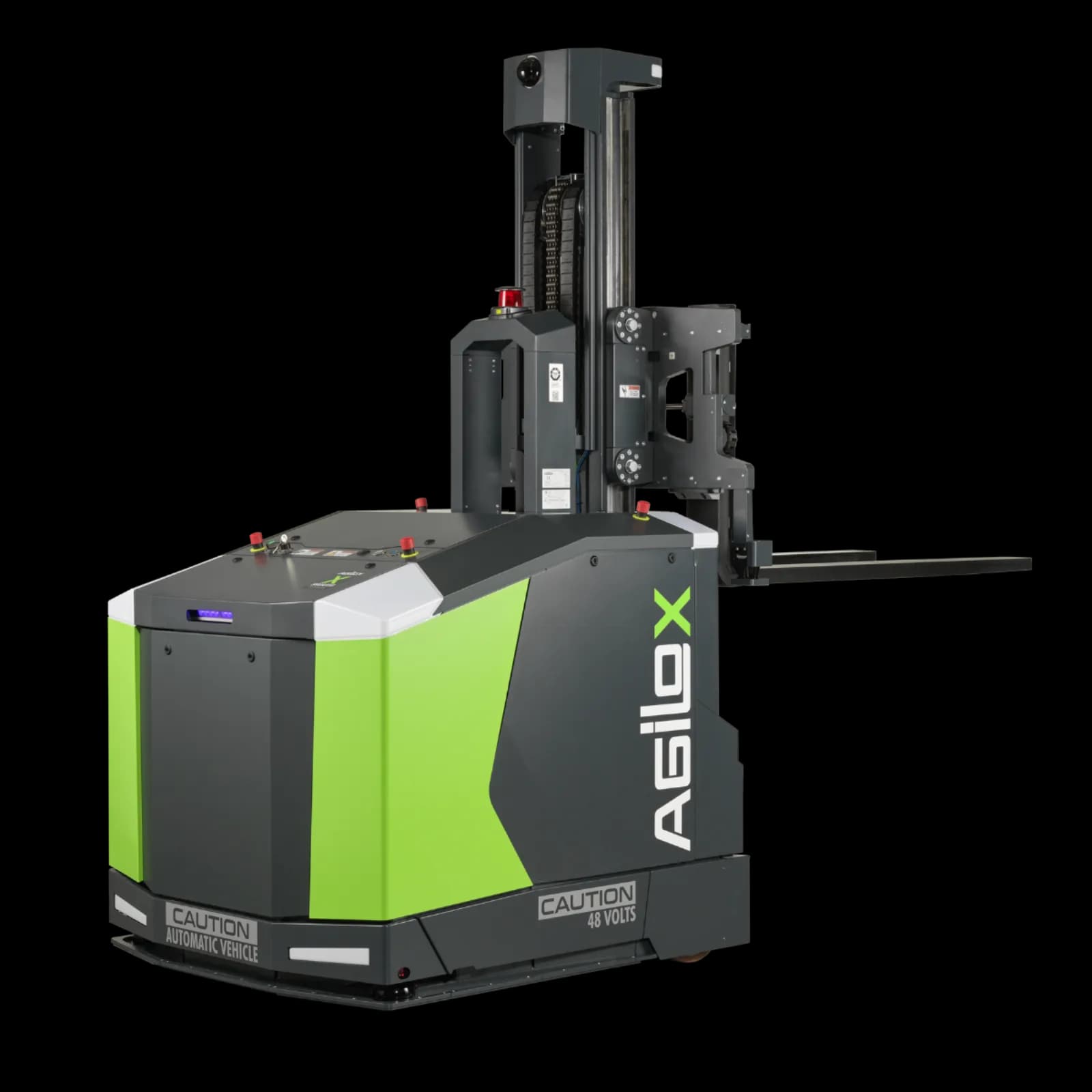
Forklift-form robots engage the pallet itself. AGILOX OCF lifts up to 1,500 kg to 1,600 mm and recovers an hour of operation from a 3-minute charge; Toyota's automated tow tractor positions loads to half-inch accuracy.[AGX2][TY1]

Examples: AGILOX OCF, Toyota Automated Core Tow Tractor

04

Dense storage with robotic retrieval

Goods-to-person and cube storage

Instead of moving people or carts, the inventory comes to the workstation. AutoStore runs 1,950+ grid systems in 65+ countries and claims up to four times the storage capacity of manual racking in the same footprint; Amazon's Hercules drive units lift 1,250 lb inventory pods.[AST1][AST2][AMZ1]

Examples: AutoStore, Amazon Hercules

05

Individual item handling

Robotic picking arms

Vision-guided arms pick single items rather than totes. Amazon's Sparrow picks items for customer orders and Vulcan, its first robot with a sense of touch, can pick and stow roughly three quarters of stored item types. RightHand's RightPick runs in Staples fulfillment centers under a multi-year agreement.[AMZ2][RH1]

Examples: Amazon Sparrow and Vulcan, RightHand RightPick

06

Package sorting and dock work

Sortation and trailer unloading

Arms and mobile robots handle outbound sortation and the brutal work inside trailers. Amazon's Cardinal handles packages up to 50 lb; Boston Dynamics' Stretch unloads up to 700 cases per hour, and DHL has signed an MOU for more than 1,000 additional Stretch robots.[AMZ2][BD6]

Examples: Amazon Robin and Cardinal, Boston Dynamics Stretch

07

Tote moves in human-shaped spaces

Warehouse humanoids

The newest category. Agility's Digit works at GXO under the industry's first humanoid Robots-as-a-Service agreement, moving totes from cobots to conveyors, and passed 100,000 totes in November 2025. Amazon has tested Digit for tote recycling.[AGL1][AGL2][AMZ4]

Examples: Agility Robotics Digit

The transport class, in depth

Warehouse transport robots compared, field by field

Transport is where most warehouses start, so it gets the deepest treatment: a shortlist of robots covering distinct movement roles, compared on live manufacturer-verified specifications from the RoboZaps catalogue.

Robots
5 robots compared
Manufacturer sources
5 manufacturer sources
Verification date
Last checked 22 July 2026

First decision

Choose the movement architecture first

Payload figures only become comparable after you decide how the load will couple to the robot. These four patterns narrow the shortlist before model-level specifications matter.

01

Tow carts or trains

Start here when the load already sits on a wheeled cart or when several carts move as one train.

Compare: MiR250 Hook or Seegrid Tow Tractor S7

02

Carry a heavy platform load

Use a platform AMR when the pallet, rack, or fixture rides directly on the robot or a top module.

Compare: OTTO 1500

03

Move cases and totes with people

Choose a collaborative workflow when people and robots share picking or material-movement tasks.

Compare: Locus Vector

04

Pick up and stack pallets

A forklift-style robot is the relevant architecture when the vehicle must engage and lift the pallet itself.

Compare: AGILOX OCF

Comparable facts, not scores

Factual comparison

Each known value links to manufacturer evidence. Undisclosed and non-applicable fields are labelled explicitly.

MiR250 Hook

Flexible cart towing

Payload

250 kg base platform

Checked 22 Jul 2026

Towing capacity

Up to 500 kg

Checked 22 Jul 2026

Runtime

10 hours with Hook

Checked 22 Jul 2026

Fleet software

MiR Fleet

Checked 22 Jul 2026

Deployment requirements

Mapped site and carts identified with AprilTags

Checked 22 Jul 2026

Availability

Active product — contact manufacturer

Checked 22 Jul 2026

Pricing evidence

Price not publicly disclosed; personalised quote via manufacturer sales

Checked 22 Jul 2026

Locus Vector

Cases, totes, and collaborative material movement

Payload

272 kg

Checked 22 Jul 2026

Towing capacity

Not publicly disclosed

Checked 22 Jul 2026

Runtime

8–10 hours

Checked 22 Jul 2026

Fleet software

LocusONE

Checked 22 Jul 2026

Deployment requirements

WMS integration; dedicated Wi-Fi equipment and installation are provided by Locus

Checked 22 Jul 2026

Availability

Active product — contact manufacturer

Checked 22 Jul 2026

Pricing evidence

Price not publicly disclosed; Robotics-as-a-Service subscription

Checked 22 Jul 2026

OTTO 1500

Heavy pallet and platform transport

Payload

1,900 kg

Checked 22 Jul 2026

Towing capacity

Not publicly disclosed

Checked 22 Jul 2026

Runtime

10 hours

Checked 22 Jul 2026

Fleet software

OTTO Fleet Manager

Checked 22 Jul 2026

Deployment requirements

Site map, traffic, charging, workflow, and WMS or MES integration work

Checked 22 Jul 2026

Availability

Active product — contact manufacturer or dealer

Checked 22 Jul 2026

Pricing evidence

Price not publicly disclosed; quote or dealer pricing

Checked 22 Jul 2026

Seegrid Tow Tractor S7

High-capacity tow trains

Payload

Not applicable

Checked 22 Jul 2026

Towing capacity

10,000 lb / 4,536 kg

Checked 22 Jul 2026

Runtime

Not publicly disclosed

Checked 22 Jul 2026

Fleet software

Fleet Central

Checked 22 Jul 2026

Deployment requirements

No fixed navigation infrastructure; dedicated server for multi-vehicle fleets

Checked 22 Jul 2026

Availability

Active product; published lead time is 18 weeks

Checked 22 Jul 2026

Pricing evidence

Hardware price not publicly disclosed; Fleet Central uses a one-time perpetual licence

Checked 22 Jul 2026

AGILOX OCF

Autonomous pallet pickup and stacking

Payload

1,500 kg lift payload

Checked 22 Jul 2026

Towing capacity

Not publicly disclosed

Checked 22 Jul 2026

Runtime

Not publicly disclosed

Checked 22 Jul 2026

Fleet software

X-Swarm

Checked 22 Jul 2026

Deployment requirements

Customer Wi-Fi and 400 V / 16 A or 32 A charging power

Checked 22 Jul 2026

Availability

Active product — contact manufacturer

Checked 22 Jul 2026

Pricing evidence

Price not publicly disclosed; quote and financing paths available

Checked 22 Jul 2026

Role-based decisions

Where each robot belongs on a shortlist

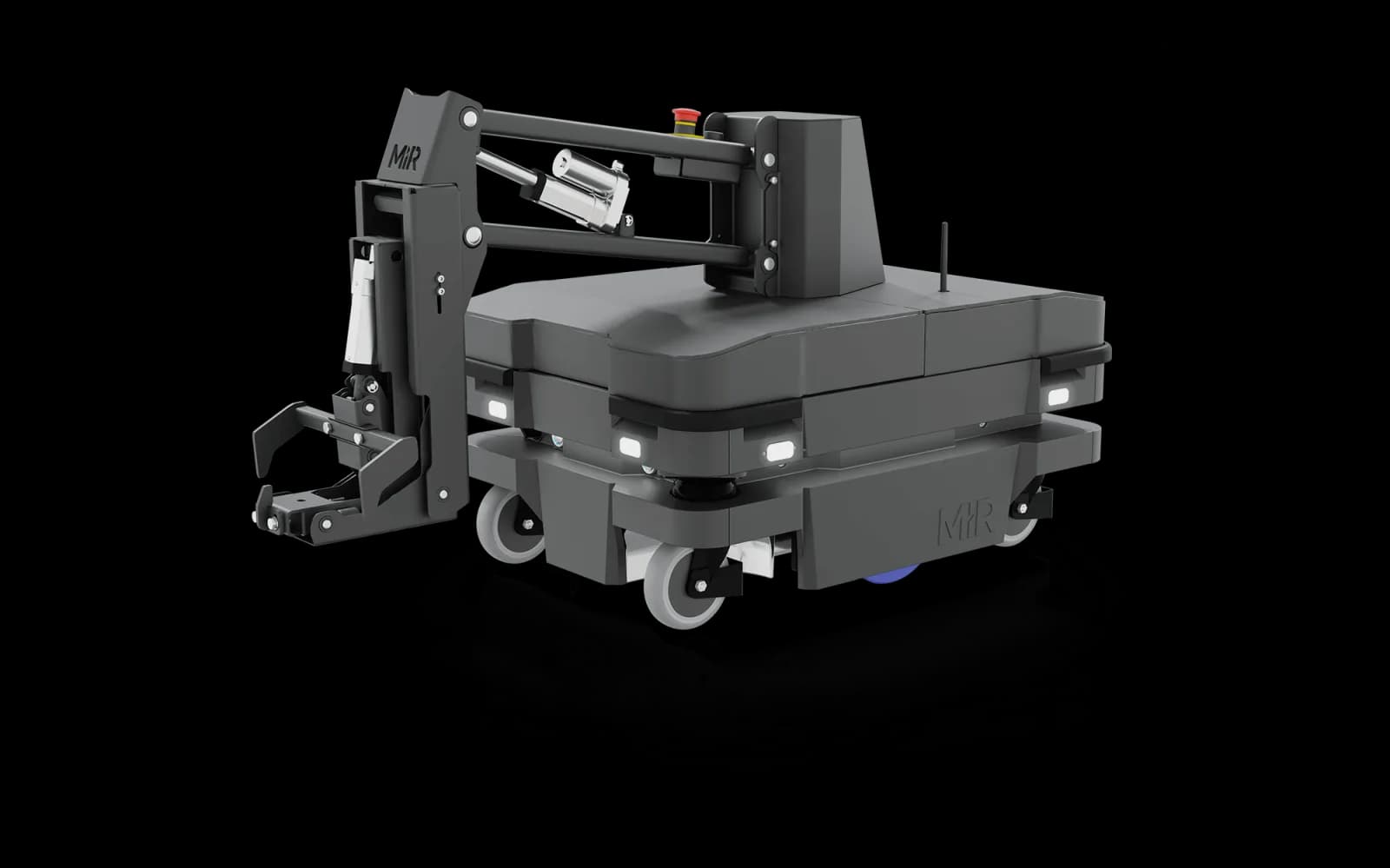
MiR250 Hook autonomous cart-towing robot

Courtesy of Mobile Industrial Robots

01

MiR250 Hook

Mobile Industrial Robots

Recommended for: Flexible cart towing

A flexible tow option for facilities that want an AMR to locate, connect to, and move existing carts between mapped stations.

Works well when
  • Carries up to 250 kg on the base while supporting a 500 kg tow load
  • MiR Fleet coordinates traffic and missions across multiple robots
Check before choosing
  • The Hook workflow requires compatible carts to be identified with AprilTags
  • Site mapping, cart geometry, route safety, and integrations still need validation
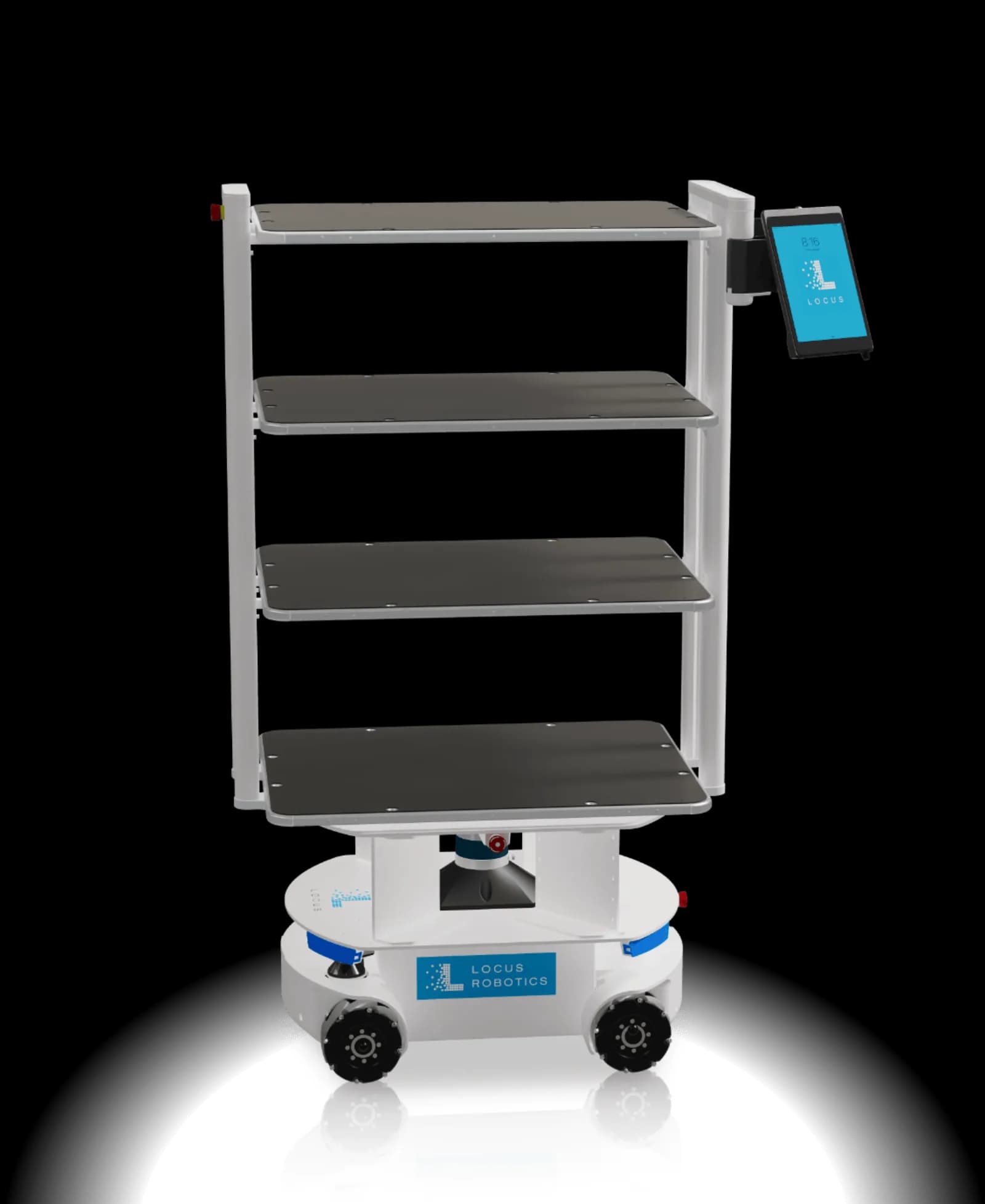
Locus Vector collaborative material-handling robot

Courtesy of Locus Robotics

02

Locus Vector

Locus Robotics

Recommended for: Cases, totes, and collaborative material movement

A collaborative material-movement option for operations that need flexible case and tote workflows under the LocusONE platform.

Works well when
  • 272 kg published payload and an 8–10 hour published runtime
  • LocusONE supports WMS integration with a dedicated Wi-Fi network supplied by Locus
Check before choosing
  • Towing capacity is not publicly disclosed
  • Workflow design and integration scope must be confirmed with Locus
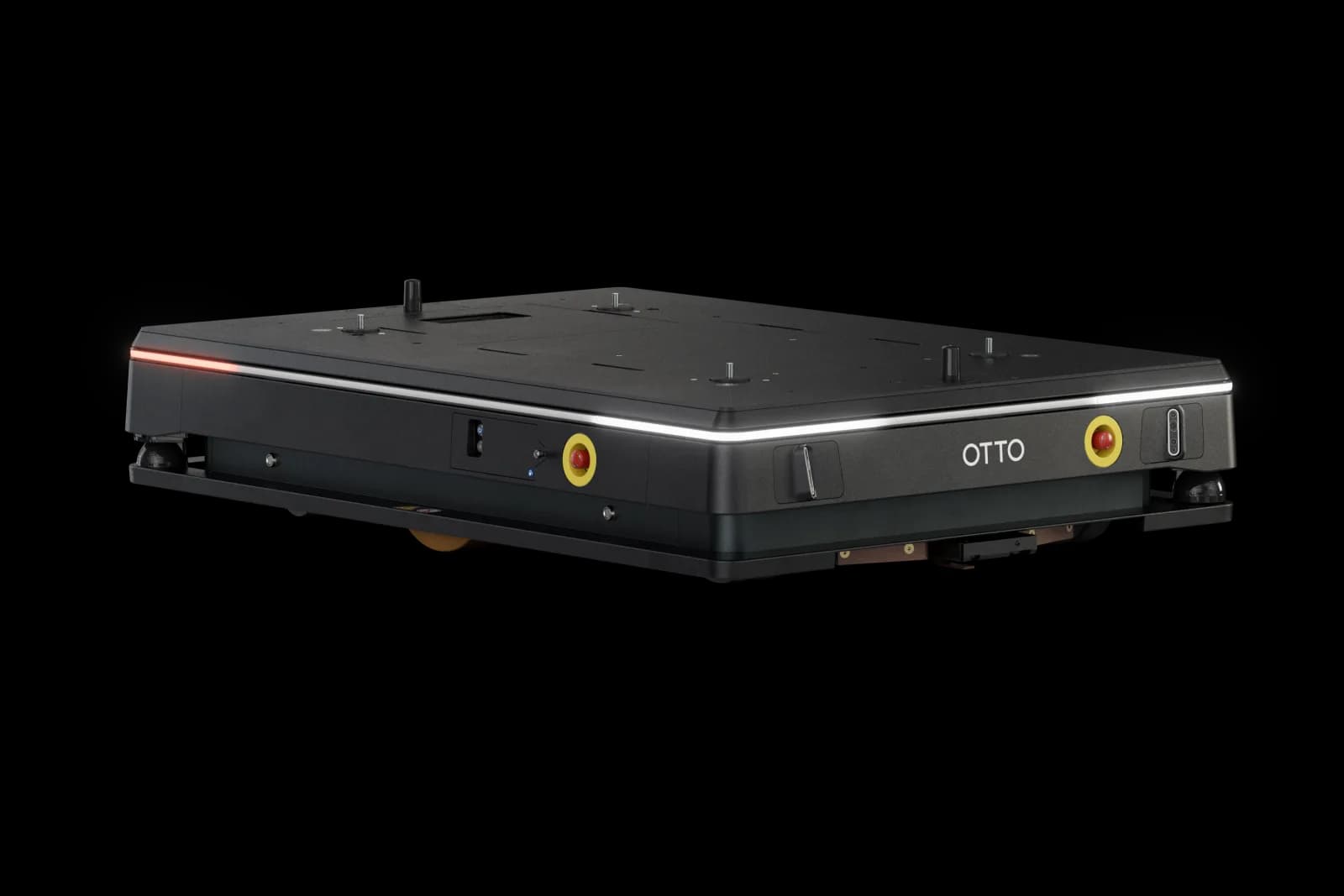
OTTO 1500 heavy-payload autonomous mobile robot

Courtesy of OTTO by Rockwell Automation

03

OTTO 1500

OTTO by Rockwell Automation

Recommended for: Heavy pallet and platform transport

A high-payload platform for facilities moving heavy pallets or fixtures on top of an AMR rather than in a tow train.

Works well when
  • 1,900 kg published payload and 10-hour stated runtime
  • Fleet Manager exposes APIs and industrial integration options
Check before choosing
  • Towing capacity is not publicly disclosed
  • Traffic design, charging, load transfer, safety, and WMS or MES work are site-specific
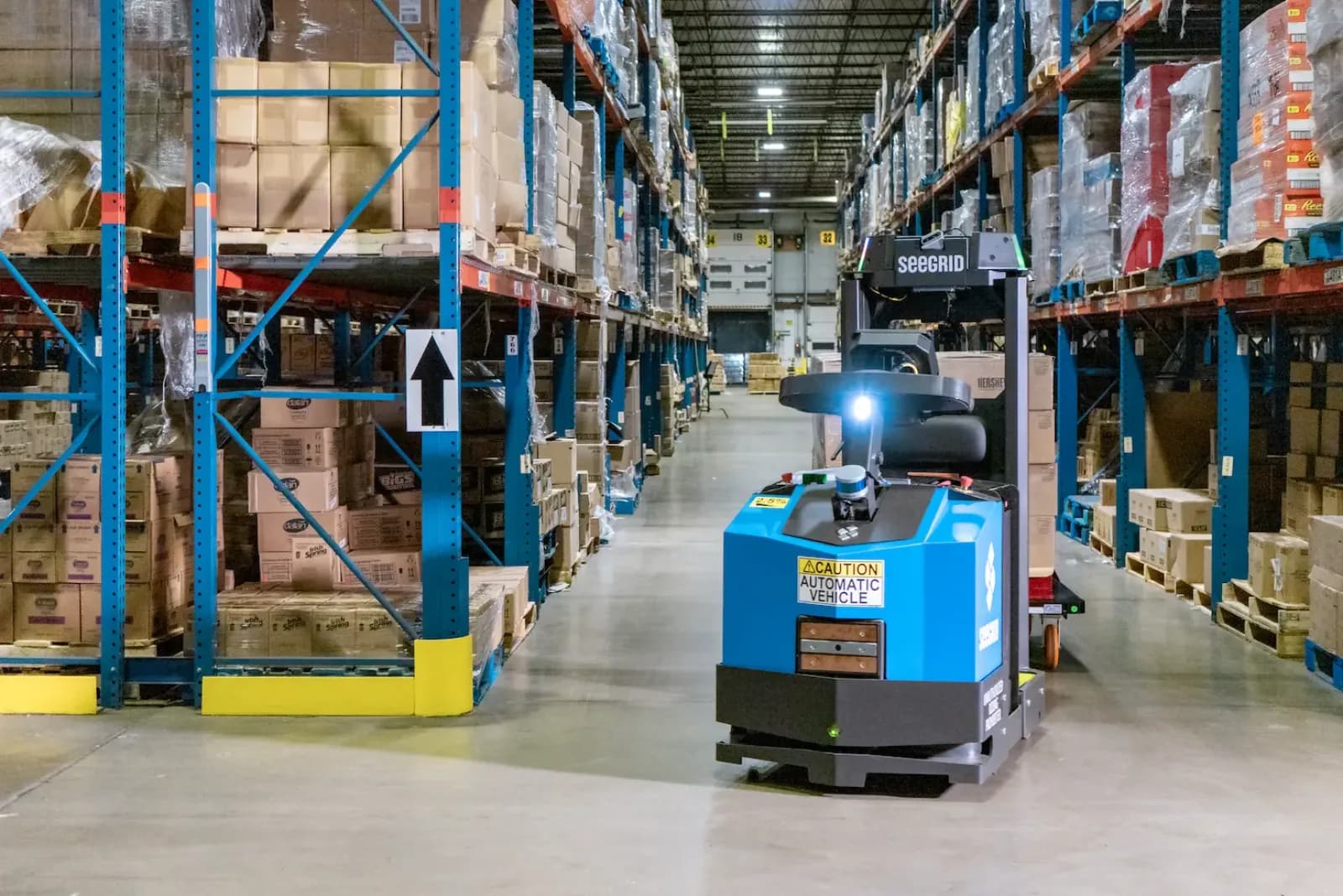
Seegrid Tow Tractor S7 moving a cart train

Courtesy of Seegrid

Recommended for: High-capacity tow trains

A dedicated tow-tractor option for long, heavy cart trains where direct platform payload is not the requirement.

Works well when
  • 10,000 lb (4,536 kg) published towing capacity
  • No fixed navigation infrastructure and Fleet Central coordination
Check before choosing
  • Direct payload is not applicable and single-charge runtime is not publicly disclosed
  • Multi-vehicle fleets require the published server and network environment
AGILOX OCF autonomous counterbalanced forklift

Courtesy of AGILOX

05

Recommended for: Autonomous pallet pickup and stacking

A counterbalanced autonomous forklift for sites that need direct pallet pickup, transport, and stacking rather than a platform AMR.

Works well when
  • 1,500 kg published lift payload
  • X-Swarm coordination and opportunity charging designed for continuous operation
Check before choosing
  • Towing capacity and single-charge runtime are not publicly disclosed
  • Customer Wi-Fi, a suitable 400 V supply, and site-specific pallet validation are required

Selection methodology

How we selected and verified these robots

Coverage by workflow

The five entries represent distinct transport roles. There is no “best overall” label or numerical fit score.

Evidence rules

Displayed facts link to manufacturer-controlled sources. Quote-only, financing, and subscription evidence is never converted into an estimated purchase price.

Freshness and gaps

“Last checked” uses the oldest verification date among the required comparison facts. Unpublished values stay explicitly marked as not publicly disclosed.

RoboZaps editorial review · required facts checked by 22 July 2026

Before requesting quotes

Warehouse transport requirements checklist

  1. 01Load carrier: cart, cage, tote, pallet, rack, or custom fixture
  2. 02Maximum payload and the weight of the carrier itself
  3. 03Required movement mode: tow, lift, carry, or stack
  4. 04Aisle, doorway, ramp, and floor constraints
  5. 05Lift, transfer-station, and load handoff dimensions
  6. 06Shifts, operating hours, peaks, and charging windows
  7. 07WMS, ERP, MES, PLC, conveyor, and door integrations
  8. 08Deployment country and required local service coverage
  9. 09Hardware, subscription, integration, and support budget
  10. 10Pilot date and full-deployment timeline

Verified operator programs

Who runs warehouse robots at scale today

Status checked 31 July 2026

Status is assigned from the named operator, joint announcement or filing wherever one exists; where only a vendor source is available, the source list says so.

Named warehouse robot deployments with source-cited maturity.
ProgramMaturityWorkflowWhat the source establishes
Amazon global networkDeployedFull-stack fulfillment roboticsAmazon deployed its one millionth robot in 2025 across more than 300 facilities, and its DeepFleet AI model improves fleet travel time by 10%.[AMZ1]
DHL Supply Chain + Locus RoboticsDeployedCollaborative picking at scaleDHL passed one billion Locus picks across 40+ sites in February 2026, under a 2023 agreement to deploy 5,000 Origin AMRs globally, which the companies called the industry's largest AMR deal.[LR2][LR3]
DHL Group + Boston Dynamics StretchDeployedTrailer unloadingAfter commercial rollouts in North America and Europe, DHL signed an MOU for 1,000+ additional Stretch robots; DHL reports 90% of its warehouses run at least one automation solution and over 7,500 robots network-wide.[BD6]
GXO Logistics + Agility DigitDeployedHumanoid tote handlingThe industry's first formal humanoid RaaS deployment: Digit moves totes from cobots onto conveyors at a SPANX fulfillment site and passed 100,000 totes moved in November 2025.[AGL1][AGL2]
Ryder + Locus RoboticsDeployedThird-party logistics pickingLocus's seven billionth cumulative pick happened at a Ryder warehouse in March 2026, four and a half months after the six-billion mark.[LR1]

The budget conversation

What warehouse robots cost, honestly

Nobody publishes a sticker price, so anchor on the labor baseline and the commercial model instead of a number from a sales deck.

Human baseline

$19 to $20 mean hourly wage

BLS May 2025 data: 2.83 million US stockers and order fillers earn a mean $19.01 per hour, and 2.95 million hand laborers and material movers earn $20.32. Robots are priced against these hours.[BLS3][BLS4]

How robots are priced

Subscriptions, not list prices

No major warehouse-robot vendor publishes a list price. Locus sells Robots-as-a-Service, positioning fleets as operating budget rather than capital investment, and GXO's Digit humanoids run under the same subscription logic.[LR6][AGL1]

Operator scale

1,043 facilities, one operator

GXO's FY2025 10-K reports roughly 154,000 team members across 1,043 facilities and 221 million square feet, running AMRs, cobots, sortation, AGVs and goods-to-person systems. DHL reports over 7,500 robots and 90% of warehouses automated.[GXO1][BD6]

Buyer questions

Warehouse robot questions

What are the main types of warehouse robots?
Seven categories cover the market: collaborative picking AMRs, transport AMRs and tuggers, autonomous forklifts, goods-to-person and cube-storage systems, robotic picking arms, sortation and trailer-unloading robots, and warehouse humanoids. Most operations mix several: transport robots feed goods-to-person stations, arms pick items, and sortation robots handle outbound.[AMZ2][AST2][AGL1]
How much do warehouse robots cost?
No major vendor publishes a list price, so treat any specific dollar figure with suspicion. The dominant commercial model is Robots-as-a-Service: a subscription covering robots, software and support as operating spend, which is how Locus sells its AMRs and how GXO runs its Digit humanoids. Price the decision against your labor baseline: US stockers and order fillers average $19.01 an hour per BLS.[LR6][AGL1][BLS3]
Do warehouse robots replace workers?
The evidence points to role shifts more than headcount cuts. Amazon has upskilled over 700,000 employees since 2019 and says its newest robotic facility needs 30% more people in reliability, maintenance and engineering roles; Whirlpool describes redeploying employees to value-added work while Seegrid tuggers move the material. US warehouse labor still employs about 5.8 million people across the two core BLS occupations.[AMZ1][AMZ3][SG1][BLS3][BLS4]
Are humanoid robots actually working in warehouses?
Yes, at small scale with real commercial terms. GXO runs Agility's Digit under the industry's first humanoid Robots-as-a-Service agreement, moving totes at a SPANX fulfillment site since 2024, with 100,000 totes passed in November 2025. Amazon has tested Digit for tote recycling. Digit carries 35 lb on a 4-hour battery, which is the realistic envelope for today's warehouse humanoids.[AGL1][AGL2][AGL3][AMZ4]
Which robots does Amazon use in its warehouses?
Amazon runs more than a million robots across 300+ facilities: Hercules and Titan drive units carry inventory pods, Proteus roams freely alongside people, Sparrow and Vulcan pick individual items, Robin and Cardinal sort packages, and the Sequoia storage system speeds inventory processing by up to 25%. A DeepFleet AI model coordinates fleet movement.[AMZ1][AMZ2][AMZ4]

Shortlist support

Tell us the loads, the routes and the systems you run

Share payload, site constraints, integrations, country, budget and timeline. We map them against the platforms above and return a shortlist that survives procurement.

Speak to an advisor

Evidence sources

Every claim above cites one of these sources. Review dates note when RoboZaps last checked the page.