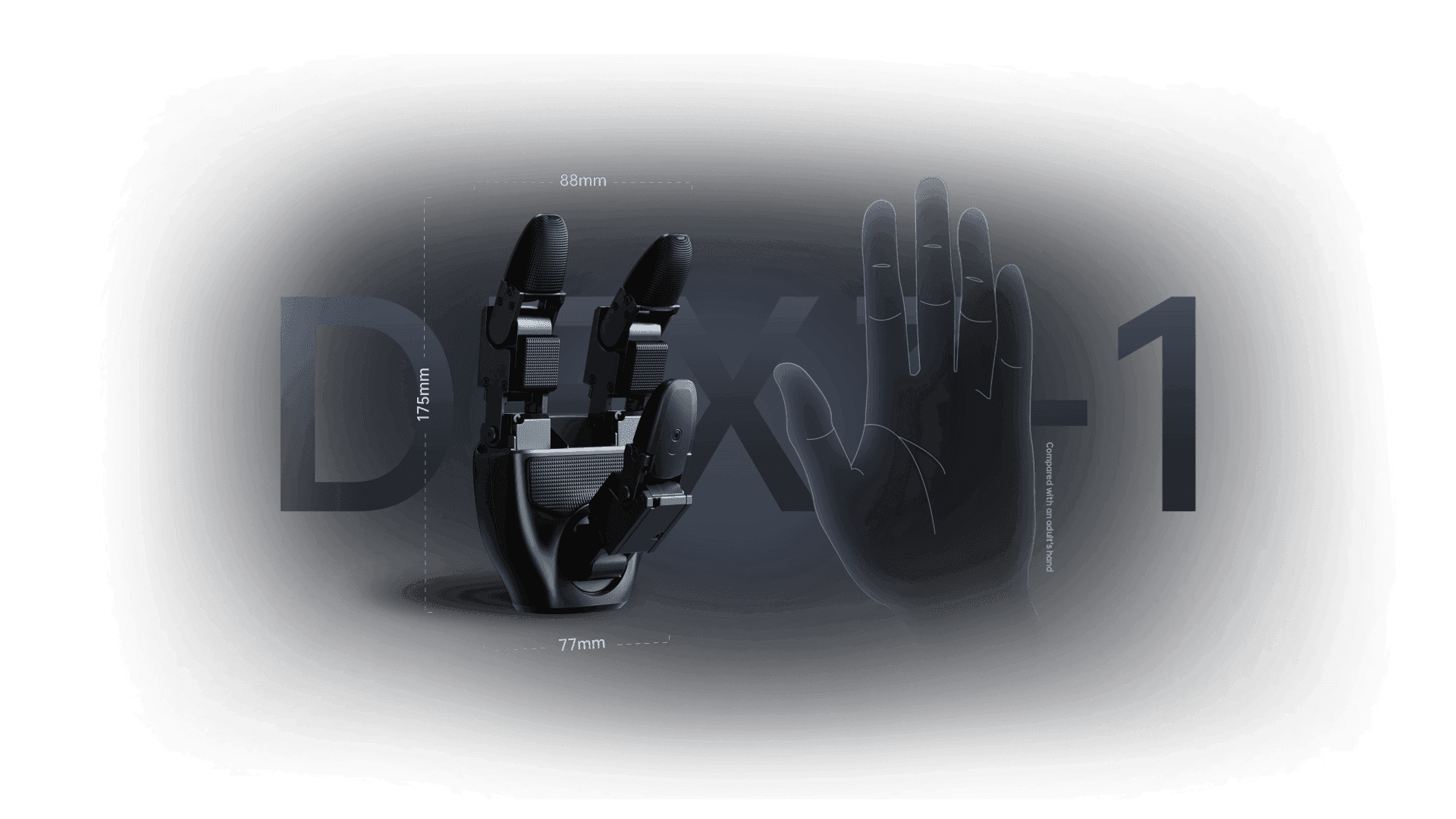
Robot Hands Compared: Dexterous Robotic Hands in 2026

Robot hands range from orderable research end effectors to dexterous systems available only as part of a humanoid robot. This comparison keeps those buying formats separate and shows source-verified degrees of freedom, actuation, tactile or force sensing, weight, grip metrics, pricing and verification dates. Use the filters to find hands you can buy separately, integrated hands and open research platforms without treating incomplete manufacturer claims as equivalent data.

18 robot hands compared · 14 with documented tactile or force sensing · 14 with a standalone buying route

Robot hand comparison: specs, sensing, prices and access

Compare manufacturer-published figures without collapsing actuated and passive joints into one number. Grip values keep their original metric, because fingertip force, holding force and payload are not interchangeable.

Showing 18 of 18 hands

Integrated only
DoF
Not published actuatedNot published total
Fingers
Not published
Actuation
Not published
Sensing
Custom tactile sensors detecting forces as small as 3 g of pressure; embedded palm camera is a separate perception system
Grip / payload
Not published
Price
Not sold separately
1X NEO Hand

1X Technologies

Integrated only
DoF
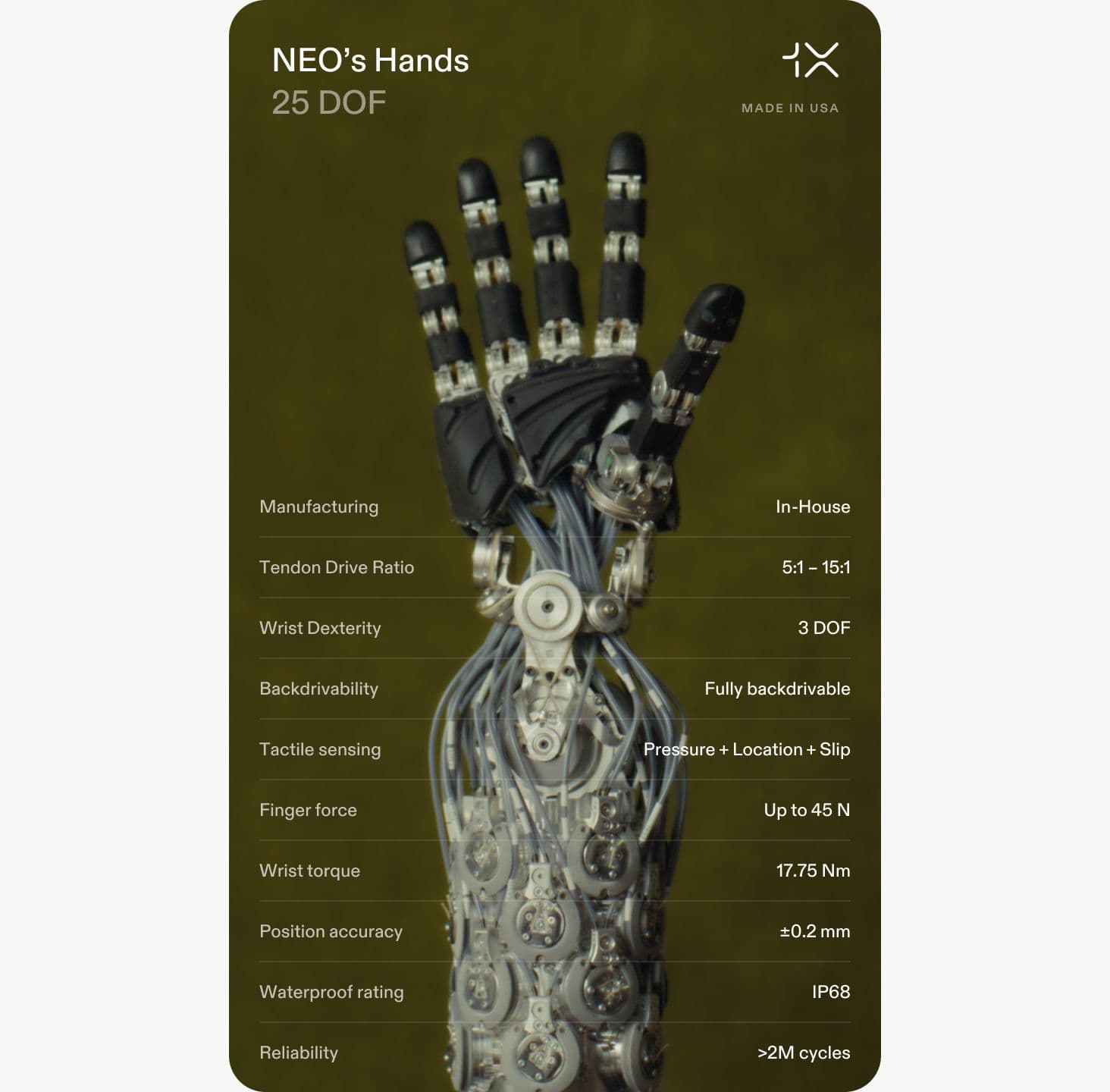
25 — fully actuated (22 hand/palm + 3 wrist), natively force-controlled actuated25 (22 hand/palm + 3 wrist) total
Fingers
5 (per official product imagery; not stated in page text)
Actuation
Quasi-direct-drive tendons (1X Tendon Drive) at approximately 5:1–15:1
Sensing
Normal force, contact location and shear across fingertips and surfaces
Grip / payload
Up to 45 N distal flexion
Price
Not sold separately
Standalone — quote
DoF
Not published — maker specifies 6 brushless DC motors rather than an actuated-DoF count actuatedNot published total
Fingers
5
Actuation
Electric multi-articulated prosthetic architecture; 6 brushless DC motors
Sensing
Fingertip pressure sensing; API streams 30 touch sensor values for research access
Grip / payload
Not published for the research product
Price
Price not published
Inspire Robots RH56DFX

Inspire Robotics

Standalone — quote
DoF
6 actuated12 joints total
Fingers
5
Actuation
Micro linear servo actuators (force-controlled)
Sensing
Integrated force sensors (0.5 N grip-force resolution); surface tactile arrays are the separate DFTP configuration
Grip / payload
15 N max thumb grip; 10 N max four-finger grip
Price
Price not published
Seed Robotics RH8D

Seed Robotics

Standalone — quote
DoF
8 actuators actuated19 total
Fingers
5
Actuation
Underactuated smart-actuator design (all 8 actuators contained inside the unit)
Sensing
Per-joint position/speed/current feedback plus palm ToF distance sensor; optional FTS tactile pressure sensors (1-axis or 3-axis, 1 mN resolution)
Grip / payload
2.5 kg vertical pull; 1 kg in 3D space
Price
Price not published
ORCA Hand

ORCA Dexterity, Inc.

Research / open source
DoF
17 (16 finger actuators + 1 wrist) actuated17 total
Fingers
5
Actuation
Tendon driven with Dynamixel or Feetech actuators
Sensing
None on base; 351 taxels on ORCA Hand Touch (Hall-effect 6D force/torque per taxel)
Grip / payload
Not published in a comparable maker test
Price
From $3,500
LEAP Hand

Carnegie Mellon University

Research / open source
DoF
16 actuated16 total
Fingers
4
Actuation
Directly actuated servo joints (16x Dynamixel XC330-M288-T)
Sensing
None in the base design
Grip / payload
Not published as a standardized grip/payload spec
Price
Price not published
Allegro Hand V5 Sense

Wonik Robotics

Standalone — quote
DoF
16 (active) actuated16 total
Fingers
4 (3 fingers + 1 thumb)
Actuation
DC motors with 16 independent current-controlled joints
Sensing
16 pressure-sensing channels; fingertip and joint pressure sensors (0–400 kPa range, 0.1 kPa accuracy, temperature-compensated)
Grip / payload
Payload 15 kg (depending on the measurement method)
Price
Price not published
Allegro Hand V5

Wonik Robotics

Standalone — quote
DoF
9 (active) actuated9 total
Fingers
3
Actuation
DC motors with 9 independent current-controlled joints
Sensing
360° omnidirectional pneumatic tactile sensors at each fingertip (capacitive air-pressure measurement)
Grip / payload
Payload 12 kg (depending on the measurement method)
Price
Price not published
Standalone — quote
DoF
2 motors actuated19 total
Fingers
Not stated by manufacturer (anthropomorphic hand with 19 finger joints)
Actuation
Underactuated soft hand with two synergies (two motors)
Sensing
None; feedback is motor position and motor current
Grip / payload
Nominal payload 2 kg (pinch configuration); 3 kg (grasp configuration)
Price
Price not published
Standalone — quote
DoF
9 drives actuated20 total
Fingers
5
Actuation
Electric servomotors with spindle guides
Sensing
None; integrated wrist electronics provide positional control
Grip / payload
Max 0.85 kg workpiece weight for human-robot collaboration applications; significantly higher permissible for other applications and form-fit clamping
Price
Price not published
Standalone — quote
DoF
20 (fully actuated; 20 independently controlled joints) actuated20 (4 DoF per finger) total
Fingers
5
Actuation
BLDC motors; 20 independently controlled joints with absolute encoders
Sensing
Not in the 2026 catalogue spec table; product page lists optional fingertip sensors (6-axis F/T, 3-axis force, tactile)
Grip / payload
Pinching payload rated/max 2.5/5 kg; envelop payload rated/max 10/20 kg (performance may depend on friction)
Price
Price not published
Standalone — quote
DoF
12 active DOF actuated19 DoF (12 active + 7 passive) total
Fingers
5
Actuation
Tendon-driven (rope-driven bionic design)
Sensing
Multi-modal perception: position, normal force, tangential force, proximity, temperature (normal force range 0–20 N, resolution 0.1 N)
Grip / payload
Grasping force ≥ 38 N; total hand load 5 kg; fingertip force ≥ 12 N
Price
Price not published
Shadow DEX-EE

Shadow Robot

Standalone — quote
DoF
12 actuated12 DoF (4 joints per finger, all driven) total
Fingers
3
Actuation
Five motors per finger in an N+1 tendon configuration; 10 kHz force control loop per motor unit; user-replaceable modular fingers
Sensing
Stereo camera-based fingertip tactile sensors; optional multi-taxel 3-DOF tactile sensors on middle and proximal phalanges (22 proximal / 14 middle sensing cells)
Grip / payload
At least 8 N force at the finger tip
Price
Price not published
Standalone — quote
DoF
20 actuated DOF actuated24 (20 actuated DOF plus 4 under-actuated movements, 24 joints) total
Fingers
4 + 1 (thumb)
Actuation
Tendon driven; 20 DC motors
Sensing
Shadow Tactile Fingertips (STF) standard in some fingertips, upgradeable; 40 tendon load sensors, 1 IMU; over 100 sensors at up to 1 kHz
Grip / payload
Not published in a comparable maker test
Price
Price not published
Unitree Dex5-1P

Unitree Robotics

Standalone — quote
DoF
16 active actuated20 (16 active + 4) total
Fingers
5
Actuation
12 micro force-controlled composite transmission joints + 4 micro force-controlled gear-transmission joints
Sensing
94 pressure sensors in total on the Dex5-1P (palm, finger pads, fingertips, finger roots); base Dex5-1 has none
Grip / payload
Maximum weight 3.5 kg (palm down) / 4.5 kg (palm left) grasping a 5 cm round hard object at room temperature; fingertip strength 10 N
Price
Price not published
Unitree Dex3-1

Unitree Robotics

Standalone — quote
DoF
7 actuated7 (thumb x3, index x2, middle x2) total
Fingers
3
Actuation
Seven micro brushless force-control joints: 6 direct drive, 1 gear drive
Sensing
33 pressure sensors per hand across palm, finger pads and fingertips (perception range 10 g–2,500 g)
Grip / payload
Maximum weight 500 g grasping a 5 cm round hard object (palm down or palm left, room temperature)
Price
Price not published
mimic hand M1

mimic robotics

Standalone — quote
DoF
15 actuated actuated21 total (15 actuated + 6 coupled) total
Fingers
5
Actuation
Bi-directional, pulley-guided tendon drive
Sensing
Tactile fingertip sensing: normal force, tangential force, multi-point contact location
Grip / payload
>25 kg steady-state payload (cylindrical power grasp); 25 N fingertip steady-state force (stretched out)
Price
Price not published

How to compare a robot hand for research or deployment

Robot hand or gripper: start with the task

A parallel or adaptive gripper is usually the better production tool when the object set, grasp direction and cycle are predictable. A multi-finger robot hand earns its extra cost and control burden when the job needs in-hand reorientation, tool use, varied object geometry or human-compatible contact. Define the required grasps and failure tolerance before using finger count or human likeness as a shortcut for capability.

Actuated DoF and total DoF are different

Manufacturers count degrees of freedom in different ways. Total DoF can include coupled, passive or wrist joints; actuated DoF counts independently driven motion. A hand with more stated joints is not necessarily more controllable. RoboZaps keeps actuated and total DoF in separate fields, preserves the maker's counting basis on the product record and marks the value unpublished when a source does not make the distinction.

Actuation changes force, compliance and maintenance

Tendon and cable drives can move motors out of the fingers and support compliant, human-like packaging, but cables stretch and may need tensioning. Direct-drive and geared joints can simplify control and deliver stiffness, while adding distal mass and potential backlash. Pneumatic and soft actuators favour safe contact and compliance but need different infrastructure. Compare actuation architecture with service access, replacement parts and expected duty cycle—not as a standalone ranking.

Tactile sensing is not a yes-or-no feature

A contact switch, a motor-current estimate, normal-force taxels and three-axis fingertip sensing provide very different feedback. Ask which surfaces are instrumented, whether the signal measures contact, normal force or shear, the spatial resolution and sampling rate, and whether raw data is exposed through the SDK. The table reports only the sensing mode a source actually documents; a tactile marketing claim without a public measurement stays qualified on the product page.

Grip figures often cannot be ranked

Vendors publish fingertip force, pinch force, holding force, cylindrical grasp capacity or payload—sometimes as a peak and sometimes as a continuous rating. Those are different tests. RoboZaps preserves the original metric and unit instead of converting them into a misleading strongest-hand leaderboard. For a real shortlist, request the test pose, object geometry, friction material, duration and safety factor behind the number.

Mechanical fit is only the first integration check

Mounting interface, side and wrist orientation, hand mass, centre of gravity, cable routing, power, communications and controller frequency all affect whether a hand works on an arm. Then inspect the software layer: ROS support, low-level command access, simulation models, calibration tooling, example grasps and licence terms. A nominally compatible flange does not make the controls, payload budget or safety case compatible.

Standalone, integrated and research access

Some robot hands can be ordered as complete hardware, some are quote-only research products, some publish open designs that still require assembly, and many headline-grabbing hands are not sold separately from their humanoid. The buying-format field makes that boundary explicit. A whole-robot announcement, preorder or price is never presented as the price or availability of its hand.

What to ask before buying

Ask for the exact left/right configuration, controller and sensor package included in the quote; continuous and peak force limits; expected cable, skin or fingertip life; replacement procedures; supported communication stack; calibration requirements; warranty exclusions; lead time; export restrictions; and a task-relevant demo using representative objects. Budget for mounting, power, controls integration, spare wear parts and engineering time as well as the hand.

How RoboZaps verifies robot hand data

This directory is built as an evidence trail, not a one-number ranking. Product pages retain the source and checked date behind each public specification so readers can audit a claim in context.

  • Scope includes multi-finger robotic end effectors sold separately, documented open research hands and integrated humanoid hands with enough primary-source detail to compare. Conventional two-jaw grippers and prostheses intended only for human use are outside this table.
  • Manufacturer product pages, manuals, data sheets, repositories and research papers are preferred. Distributor or reputable third-party evidence is labelled when no primary source publishes the field.
  • Actuated and total degrees of freedom remain separate. Wrist joints are included only when the source includes them in the hand assembly, and the product record carries that counting note.
  • Grip, payload, holding force, pinch force and fingertip force retain their published names and units. Blank cells mean no usable public figure was found; they are not zero.
  • Buying format describes the hand itself. A humanoid's commercial status or whole-robot price is not inherited by an integrated hand.
  • Verification dates show when RoboZaps last checked the record. Conflicting or superseded claims are withheld from the table until the record can explain the discrepancy.

All robot hands in the database

No image

Figure 03 Hand

Figure AI

The redesigned hand system of Figure's third-generation humanoid, Figure 03, purpose-built for the Helix vision-language-action AI. It ships only as part of the Figure 03 robot and is not sold separately.

Robotic Hands
1X NEO Hand robotic hand — official product image
robot hand: 1X NEO Hand by 1X Technologies

1X NEO Hand

1X Technologies

The hands of 1X's NEO humanoid: 25 degrees of freedom (22 in the fingers and palm plus 3 at the wrist), tendon-driven and force-controlled, with tactile sensing across fingertips and surfaces. They ship only as part of NEO.

Robotic Hands
PSYONIC Ability Hand for Research robotic hand — official product image

PSYONIC Ability Hand for Research

PSYONIC

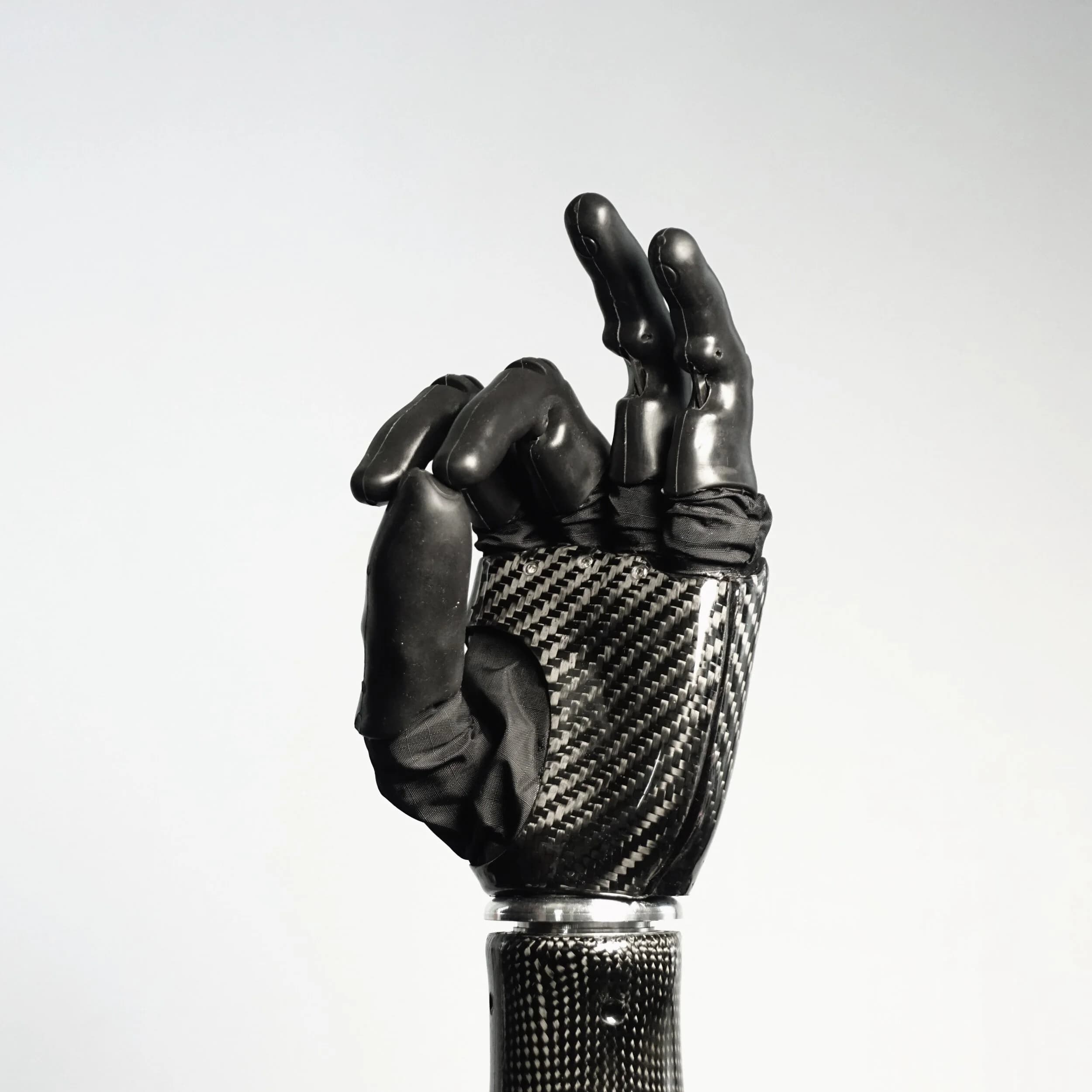
PSYONIC's Ability Hand is a 490 g multi-articulated bionic hand, originally a prosthesis, that PSYONIC also sells to robotics research users with full API access.

Robotic Hands
Inspire Robots RH56DFX robotic hand — official product image

Inspire Robots RH56DFX

Inspire Robotics

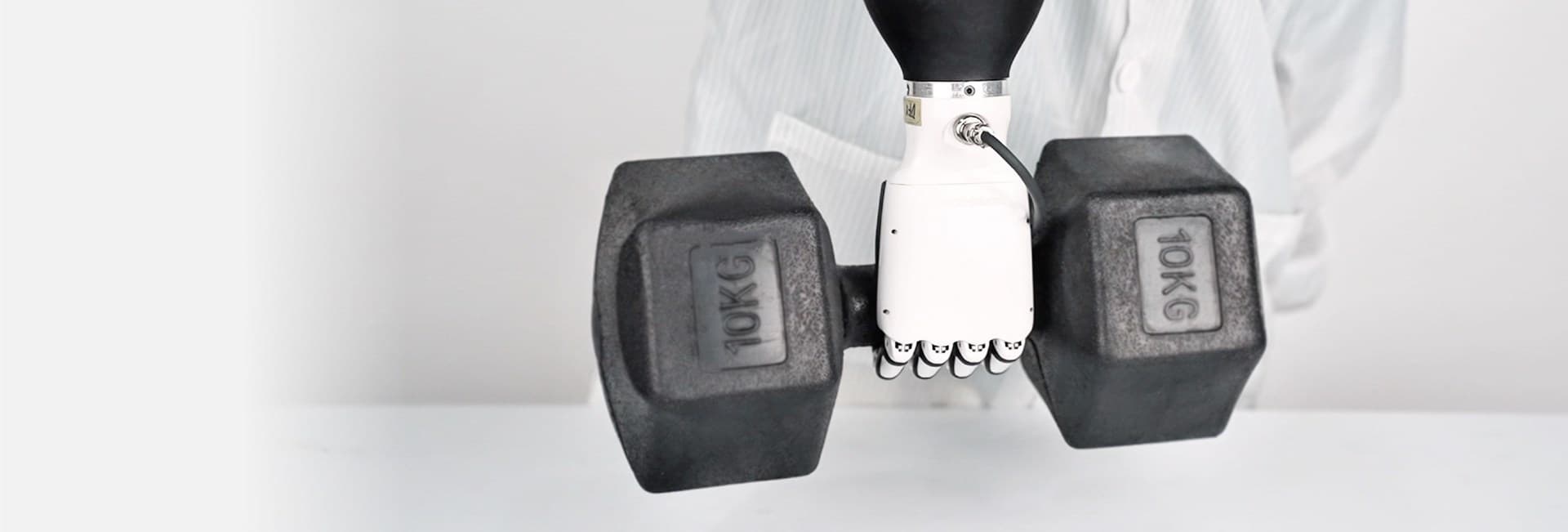
The RH56DFX is Inspire Robots' humanoid five-finger dexterous hand with 6 degrees of freedom across 12 joints, driven by force-controlled micro linear servo actuators. It integrates force sensing with 0.5 N resolution and is aimed at robot end effectors and prosthetics.

Robotic Hands
Seed Robotics RH8D robotic hand — official product image

Seed Robotics RH8D

Seed Robotics

The RH8D is Seed Robotics' adult-size dexterous robot hand with 19 degrees of freedom driven by 8 smart actuators contained inside the unit. Its underactuated design conforms to object shapes, and it offers rich per-joint sensing with optional FTS tactile pressure sensors.

Robotic Hands
ORCA Hand robotic hand — official product image

ORCA Hand

ORCA Dexterity, Inc.

The ORCA Hand is an open-source, tendon-driven anthropomorphic robotic hand that originated in the Soft Robotics Lab at ETH Zurich and is sold by ORCA Dexterity, Inc. Fully assembled hands ship with Feetech or Dynamixel actuators, and the Touch variant adds 351 tactile taxels across all five digits.

Robotic Hands

From $3,500Listed price

LEAP Hand robotic hand — official product image

LEAP Hand

Carnegie Mellon University

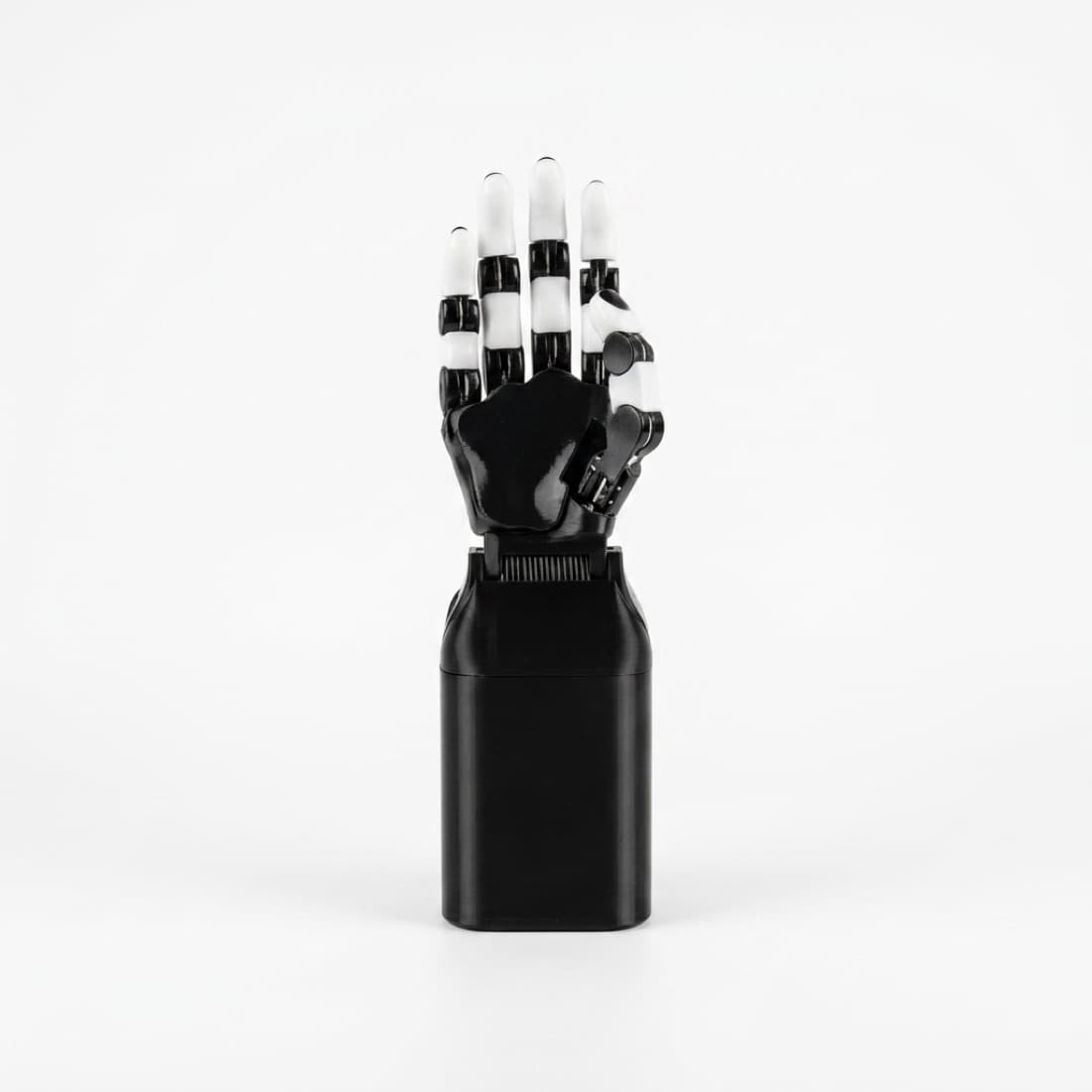
LEAP Hand is a low-cost, anthropomorphic four-finger robot hand for machine-learning research, presented at RSS 2023 by Carnegie Mellon University researchers. It is fully open source, with CAD, URDF, simulation environments, and APIs released, and assembles from off-the-shelf parts for under $2,000.

Robotic Hands
Allegro Hand V5 Sense robotic hand — official product image

Allegro Hand V5 Sense

Wonik Robotics

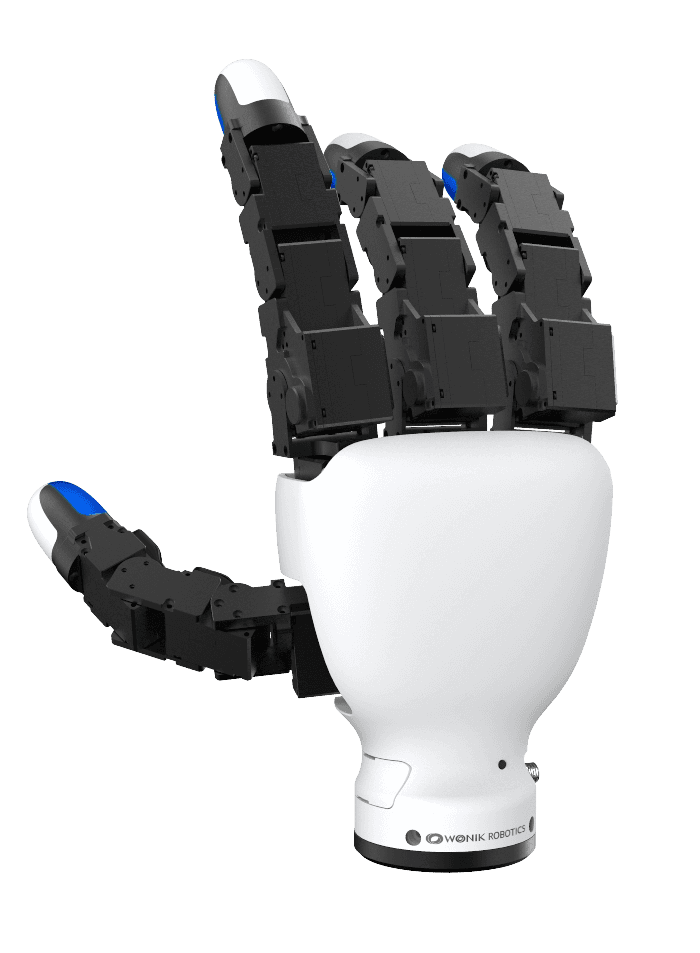
The Allegro Hand V5 Sense is a four-finger (three fingers plus thumb), 16-DoF research hand equipped with 16 pressure-sensing channels across fingertip and joint sensors for detailed force-distribution feedback.

Robotic Hands
Allegro Hand V5 robotic hand — official product image

Allegro Hand V5

Wonik Robotics

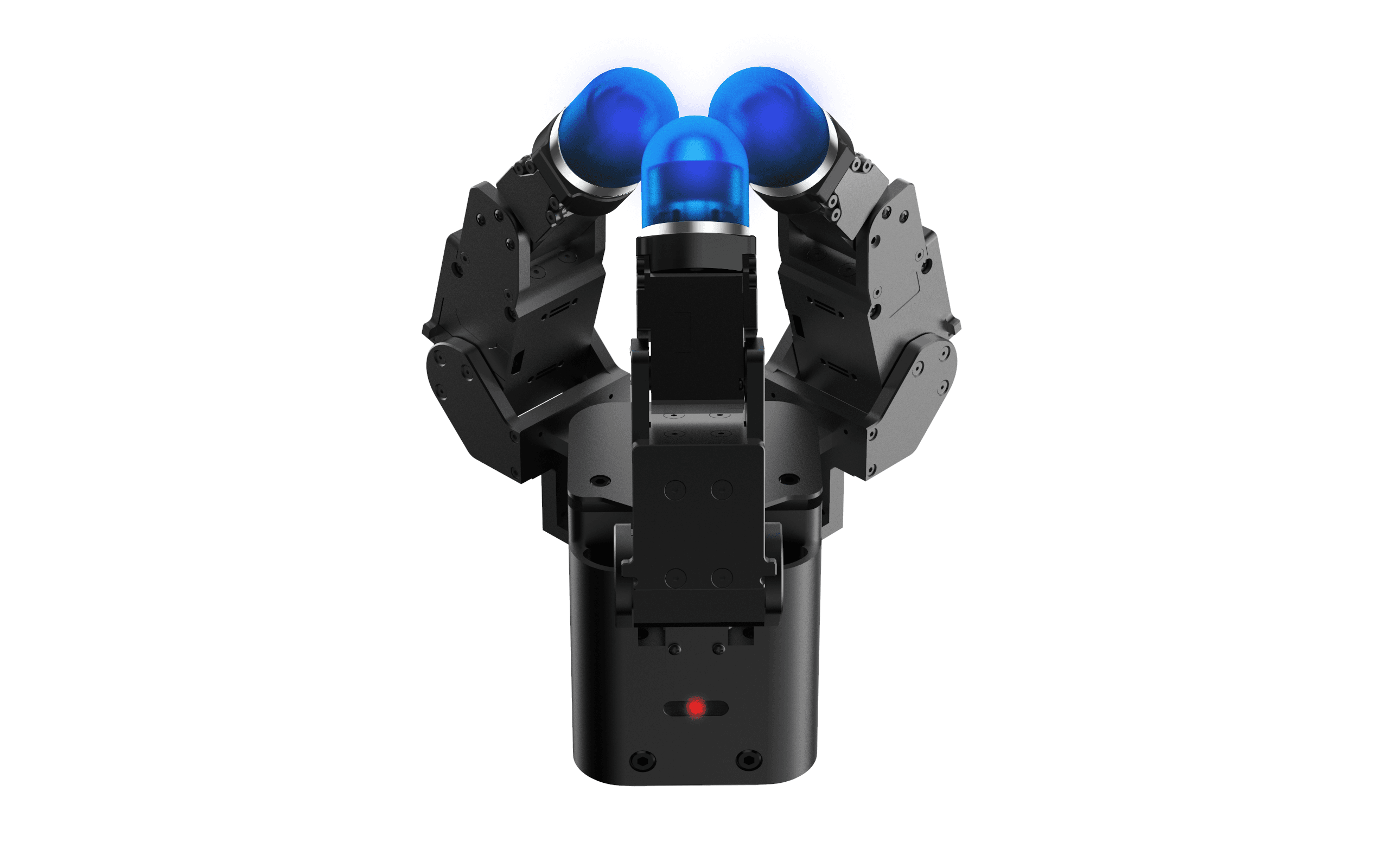
The Allegro Hand V5 is a three-finger dexterous research hand with a 9-DoF structure of independent current-controlled joints, equipped with 360° omnidirectional pneumatic tactile fingertip sensors.

Robotic Hands
qb SoftHand2 Research robotic hand — official product image

qb SoftHand2 Research

qb robotics

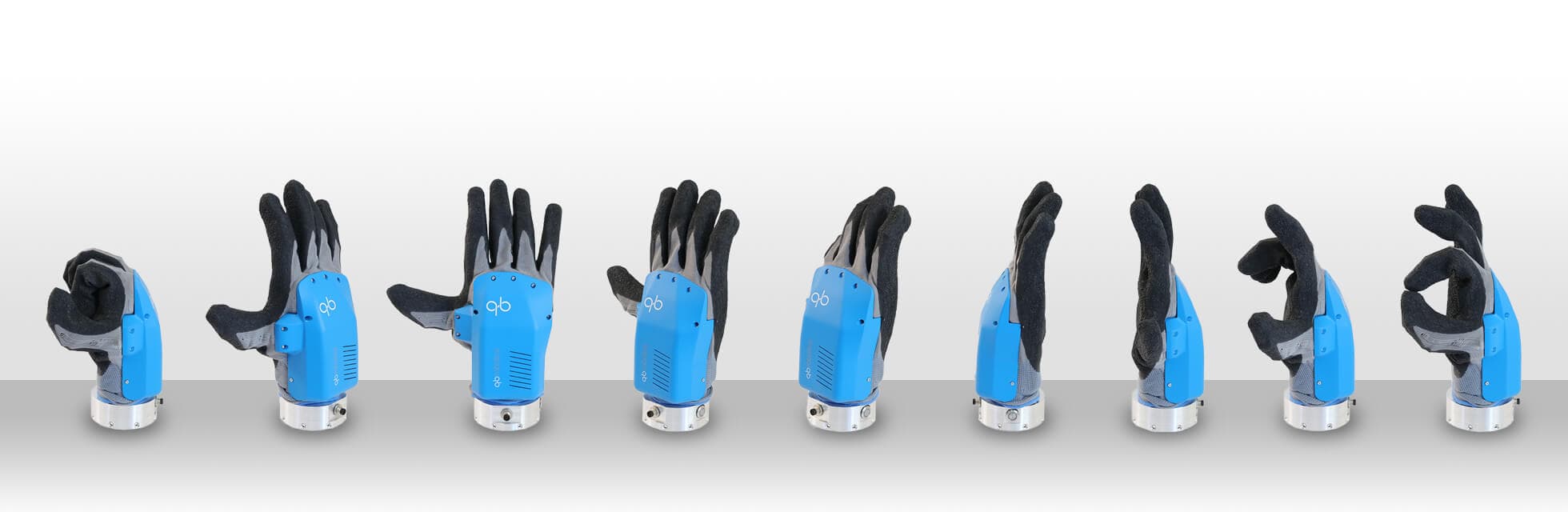
The qb SoftHand2 Research is an anthropomorphic soft robotic hand with 19 degrees of freedom driven by two motors through two synergies, capable of both power and precision grasps and in-hand manipulation.

Robotic Hands
SCHUNK SVH robotic hand — official product image

SCHUNK SVH

SCHUNK

The SCHUNK SVH is a series-production anthropomorphic five-finger gripping hand with nine drives moving 20 degrees of freedom, with all control, regulator and power electronics integrated in the wrist.

Robotic Hands
Tesollo DG-5F-M robotic hand — official product image

Tesollo DG-5F-M

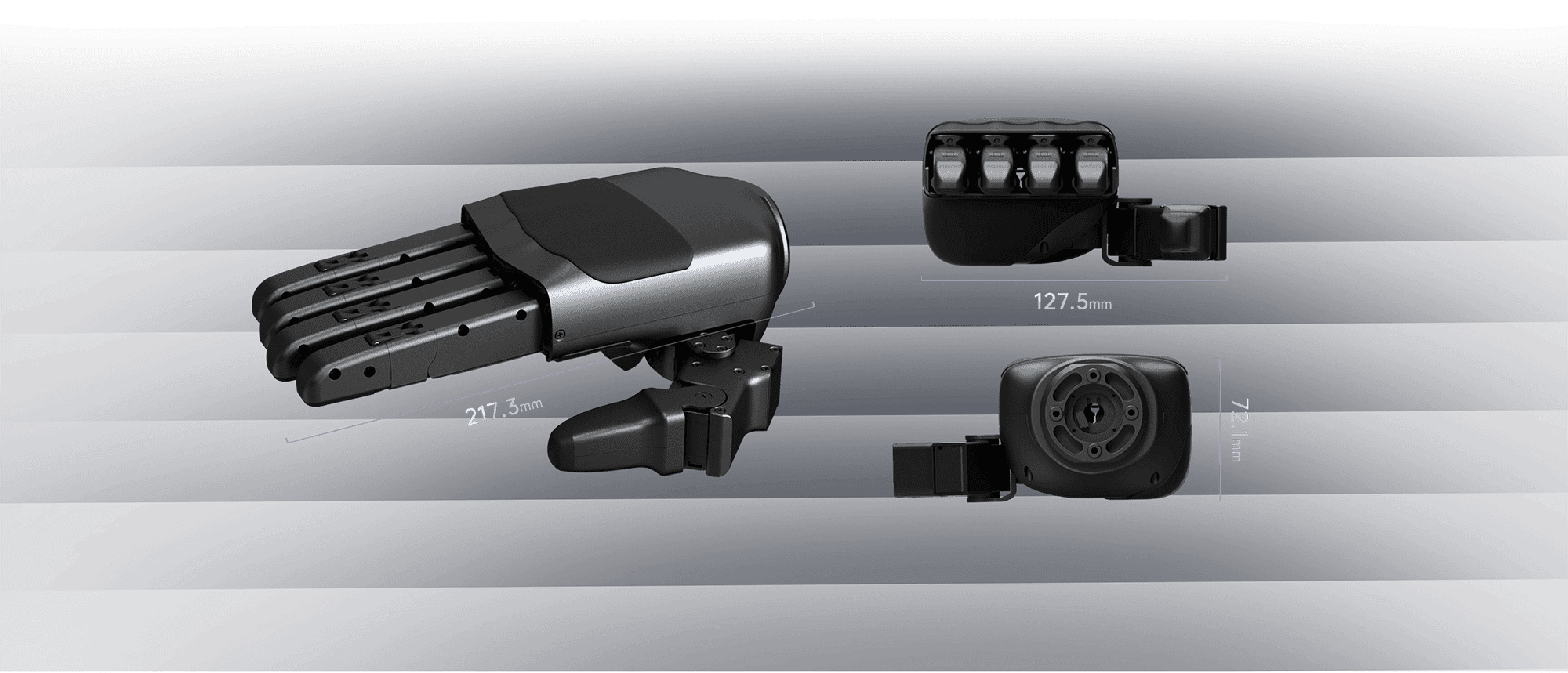
Tesollo

A fully actuated five-finger robot hand similar in size to an adult male's hand, composed of 20 independently controlled BLDC-driven joints, rated for 2.5 kg pinch and 10 kg envelop payloads.

Robotic Hands
DexHand021 Mass Production robotic hand — official product image

DexHand021 Mass Production

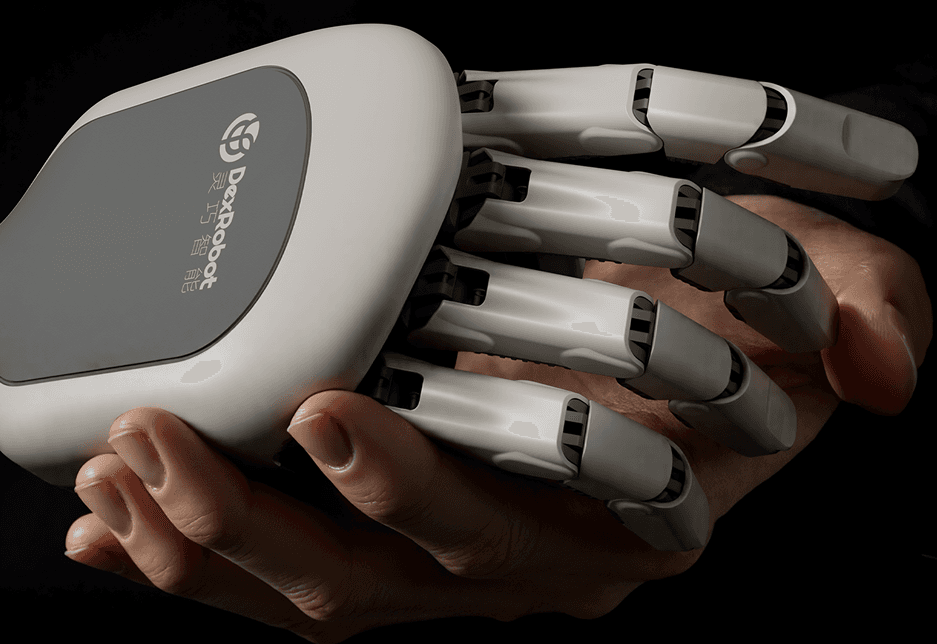
DexRobot

A commercial five-finger dexterous hand with 19 DoF (12 active, 7 passive), tendon-driven transmission, five tactile sensing modalities, and active thermal management for 24/7 operation.

Robotic Hands
Shadow DEX-EE robotic hand — official product image

Shadow DEX-EE

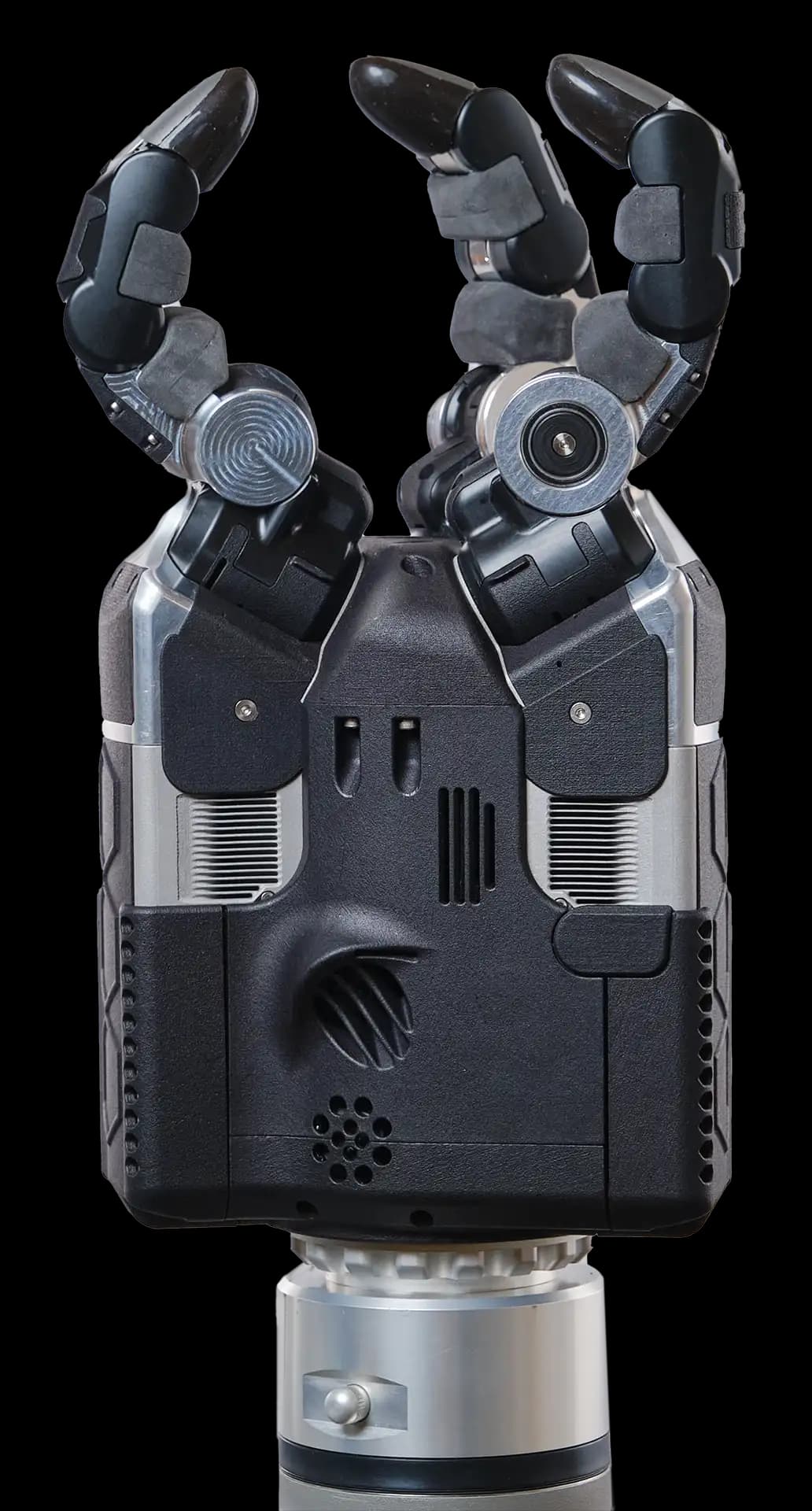
Shadow Robot

A three-finger, 12-DoF dexterous hand developed in collaboration with Google DeepMind for high-cycle machine learning research, with tendon transmission, active compliance, and dense tactile sensing.

Robotic Hands
Shadow Dexterous Hand robotic hand — official product image

Shadow Dexterous Hand

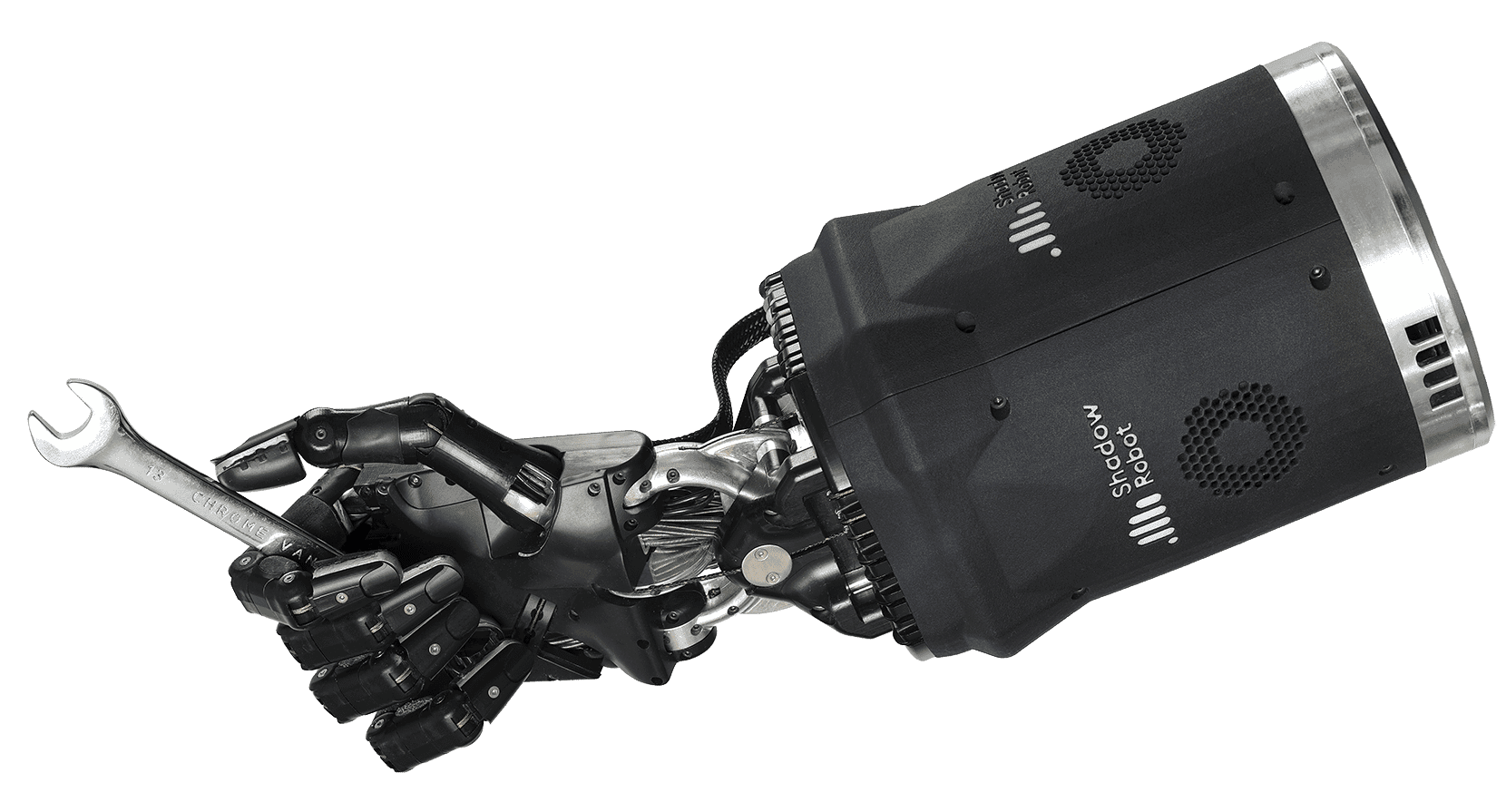
Shadow Robot

A five-finger, tendon-driven robot hand with 20 DC motors, 20 actuated DOF plus 4 under-actuated movements across 24 joints, and over 100 sensors running at up to 1 kHz.

Robotic Hands
Unitree Dex5-1P robotic hand — official product image

Unitree Dex5-1P

Unitree Robotics

The tactile-sensing variant of Unitree's five-finger Dex5-1 dexterous hand, with 20 degrees of freedom (16 active) and 94 pressure sensors per hand.

Robotic Hands
Unitree Dex3-1 robotic hand — official product image

Unitree Dex3-1

Unitree Robotics

A three-finger dexterous hand with seven motor-driven degrees of freedom and 33 pressure sensors per hand, designed to pair with Unitree's G1 humanoid robot.

Robotic Hands
No image

mimic hand M1

mimic robotics

Swiss-made dexterous robotic hand with 21 total DoF, tactile sensing, and a >25 kg steady-state power-grasp payload.

AccessoriesRobotic Hands

Robot hand FAQ

What is the difference between a robot hand and a robot gripper?

A robot gripper is an end effector designed to secure objects, often with two jaws, suction or a task-specific mechanism. A robot hand uses multiple articulated digits to support a wider grasp set and sometimes in-hand manipulation. Hands offer flexibility at the cost of more actuators, sensing, control complexity and maintenance; predictable production tasks often remain better served by a gripper.

Can you buy a dexterous robot hand separately?

Some dexterous hands are sold as standalone research or integration products, while others are available only through a quote, an open hardware build or as part of a complete humanoid. Use the Buying format filter and confirm what the quote includes. RoboZaps does not treat a whole robot's sales route as proof that its hand is sold separately.

How much does a robot hand cost?

Public pricing is inconsistent: a few makers and open-hardware projects publish a component price, many commercial research hands require a quote, and integrated humanoid hands have no separate price. The table shows a price only when it applies to the hand and has an auditable basis; otherwise it says to contact the maker rather than borrowing the host robot's price.

How many degrees of freedom does a robotic hand need?

There is no universal minimum. Simple grasp sets can work with a few coupled joints, while in-hand manipulation benefits from more independently actuated motion. Compare actuated DoF, coupling, joint range and control access against the target grasps. Total DoF alone can overstate controllability when several joints move together.

Does a five-finger robot hand outperform a three-finger hand?

Not automatically. Five fingers can expand anthropomorphic grasp and tool-use options, but a well-designed three-finger hand may be lighter, stronger, easier to control and more reliable for the target objects. Task coverage, independent actuation, sensing, friction surfaces and control software matter more than matching the human finger count.

What tactile sensing should a robot hand have?

Match the sensing to the control problem. Contact detection may be enough for basic grasp closure; force regulation needs calibrated normal-force data; slip-aware manipulation benefits from shear or vibration signals and adequate sampling. Check where sensors are located, their resolution, refresh rate, durability and whether the SDK exposes raw or processed readings.

Are open-source robot hands suitable for commercial deployment?

They can be excellent for research, controls development and custom integration, but an open design is not the same as a supported production component. Review the hardware and software licence, bill-of-material continuity, assembly calibration, safety validation, replacement parts and who owns reliability. Commercial deployment may still require substantial engineering and a support plan.

Which robot hand is the most dexterous?

No public benchmark supports a defensible universal winner. Dexterity depends on the task, joint independence and range, sensing, force control, speed, software and reliability—not the largest DoF number. Shortlist hands against a representative object and manipulation test, then compare sourced specs and access constraints before arranging a demonstration.

Related robot and manipulation guides

Know which robot to buy in five business days

The Robot Sourcing Brief is US$1,950 fixed: a scored shortlist of three platforms with sources, US legality per model, and real deployment costs. Credited in full if you procure through RoboZaps.

Not ready to spend anything? Start with the free US deployability report.