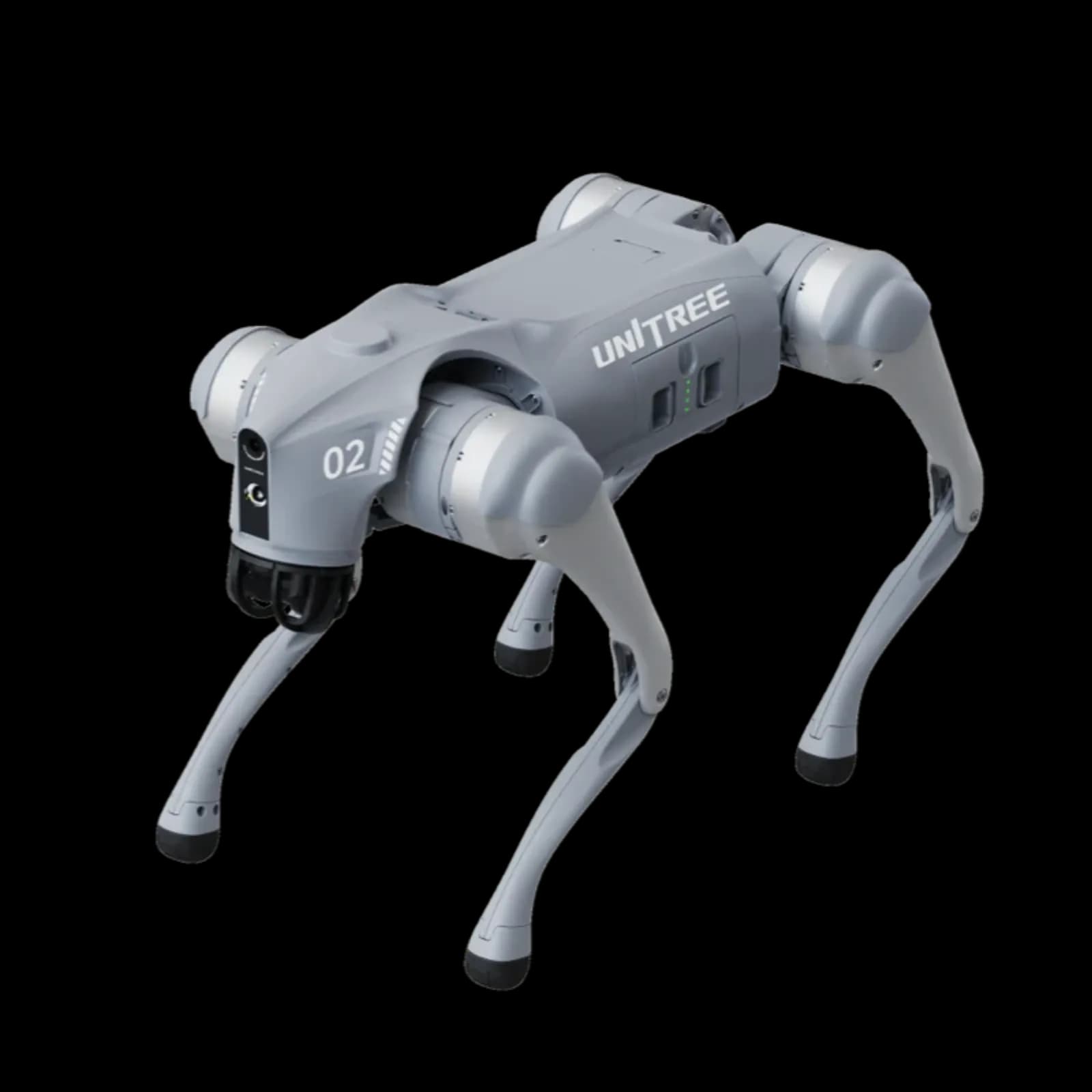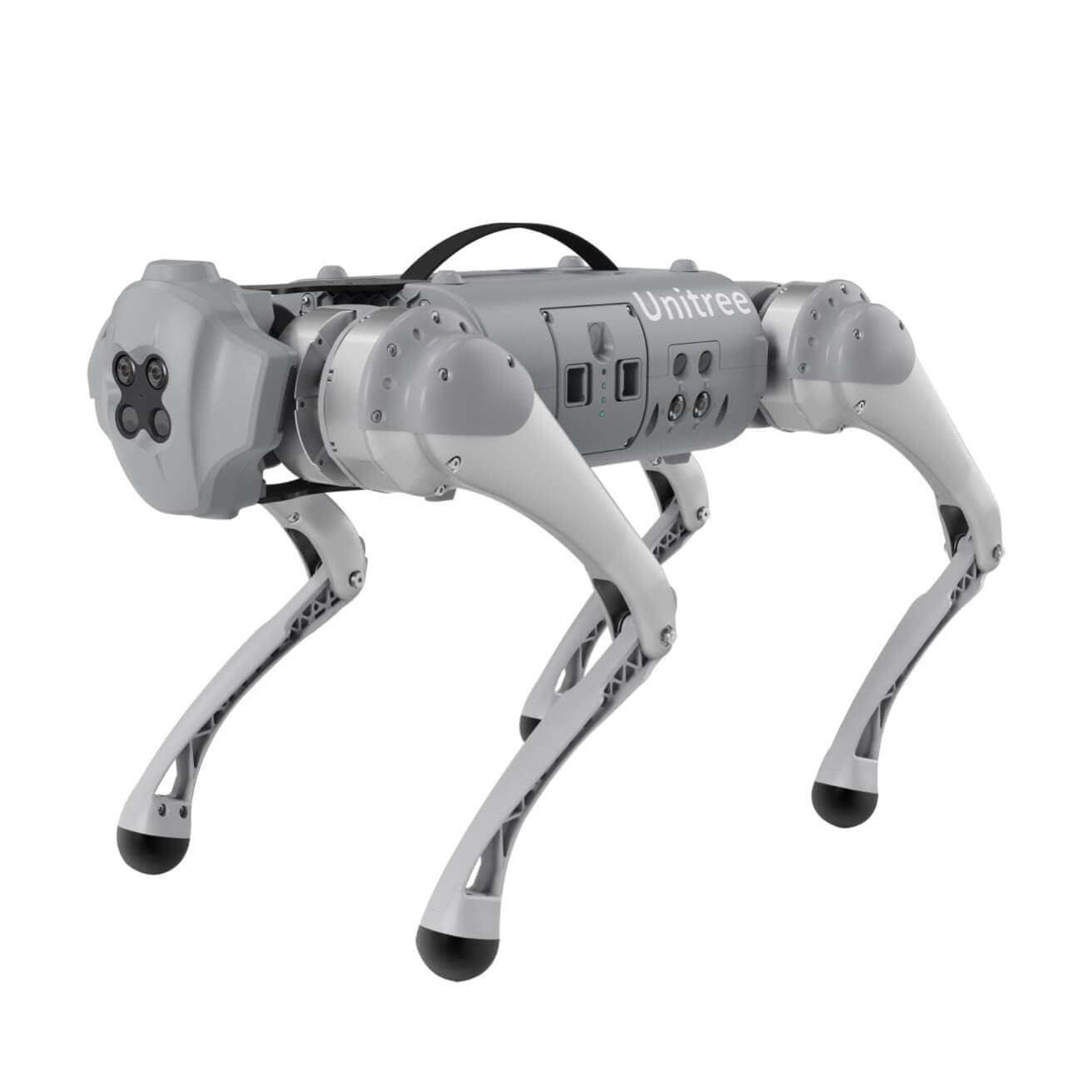
Aliengo
Industrial-grade mid-size quadruped robot for research and inspection
Official price
$50,000
Verified manufacturer source · Jul 8, 2026
Key facts
Values reflect the public record
- Height
- 600 mm (standing)Manufacturer confirmed
- Weight
- 21.5 kg (±1 kg, without battery)Manufacturer confirmed
- Payload
- 13 kgManufacturer confirmed
- Degrees of freedom
- 12Manufacturer confirmed
- Runtime
- 2.5–4.6 h (endurance)Manufacturer confirmed
- Max speed
- 1.5 m/sManufacturer confirmed
Canonical robot record
Overview
Aliengo is a mid-size, fully electric quadruped robot from Unitree Robotics positioned for industrial-level applications as well as research and education. It pairs a depth-sensing vision system with force-controlled joints to move dynamically across uneven ground, slopes, and steps.
The platform is built to be extended. Users can mount their own modules such as vision cameras, LiDAR, robotic arms, and GPS units, and the robot exposes a range of external interfaces for integration and interactive control.
Aliengo sits in Unitree's lineup above its smaller consumer-oriented robots, offering higher payload capacity and a more capable sensing and protection package suited to inspection, reconnaissance, and applied robotics work.
RoboZaps maintains this record as part of its canonical robotics database. Specs are source-verified where linked; the record compares public facts across manufacturers rather than representing a single robot maker.
- Spec sources
- 2 linked
- Verification
- Partially verified · 10/12 specs source-verified
- Deployment
- Paid Deployment
- Last verified
- Jul 17, 2026
Key Features
- Multi-view depth-sensing vision system for real-time perception and navigation
- Joint force-control technology for dynamic, stable locomotion over varied terrain
- Modular payload support for user-mounted cameras, LiDAR, robotic arms, and GPS
- Rich external interfaces (Ethernet, USB, RS-485) for integration and interactive control
- Integrated protective design with built-in air cooling for sustained operation
Specifications
Grouped technical data with source detail available on demand.
14 documented values
Connectivity
| Communication | WiFi, Ethernet, 4G Unverified |
|---|
Environment
| IP Rating | IP54 Unverified |
|---|
Mechanics
| Degrees of Freedom | 12Manufacturer confirmedVerified Jul 8, 2026 Unitree Robotics |
|---|---|
| Locomotion | QuadrupedManufacturer confirmedVerified Jul 8, 2026 Unitree Robotics |
Performance
| Max Speed | 1.5 m/sManufacturer confirmedVerified Jul 8, 2026 Unitree Robotics |
|---|---|
| Payload Capacity | 13 kgManufacturer confirmedVerified Jul 8, 2026 Unitree Robotics |
Physical
| Height | 600 mm (standing)Manufacturer confirmedVerified Jul 8, 2026 Unitree Robotics |
|---|---|
| Weight | 21.5 kg (±1 kg, without battery)Manufacturer confirmedVerified Jul 8, 2026 Unitree Robotics |
| Width | 310 mm Unverified |
| Depth | 650 mm Unverified |
Power
| Runtime | 2.5–4.6 h (endurance)Manufacturer confirmedVerified Jul 8, 2026 Unitree Robotics |
|---|
Sensing
| Sensors | Depth cameras ×2, visual-odometer camera ×1, foot-end force sensors ×4; optional LiDAR (single or multi-line)Manufacturer confirmedVerified Jul 8, 2026 Unitree Robotics |
|---|
Software
| ROS Compatible | YesManufacturer confirmedVerified Jul 8, 2026 Unitree Robotics |
|---|---|
| SDK Support | YesManufacturer confirmedVerified Jul 8, 2026 Unitree Robotics (GitHub) |
Evidence & changelog
Sources behind this record and material corrections made over time.
Pricing evidence & history
$50,000Official price
Current · VerifiedObserved Jul 8, 2026Unitree Robotics (official shop)
Sources
- Unitree Robotics — cites Height, Weight, Payload Capacity, Battery Life, Max Speed, Degrees of Freedom, Locomotion, Sensors, ROS Compatible
- Unitree Robotics (GitHub) — cites SDK Support
Media
Manufacturer
Chinese robotics company developing affordable quadruped and humanoid robots for consumer, industrial, and research markets.
- Headquarters
- Hangzhou, China
- Founded
- 2016