Go1
Consumer-grade bionic quadruped robot companion
Price
$2,700 – $3,500
Legacy record price · Jul 17, 2026
Key facts
Values reflect the public record
- Height
- 400 mm
- Weight
- 12 kgManufacturer confirmed
- Payload
- 5 kgManufacturer confirmed
- Degrees of freedom
- 12Manufacturer confirmed
- Runtime
- 60 min
- Max speed
- 3.7 m/sManufacturer confirmed
Canonical robot record
Overview
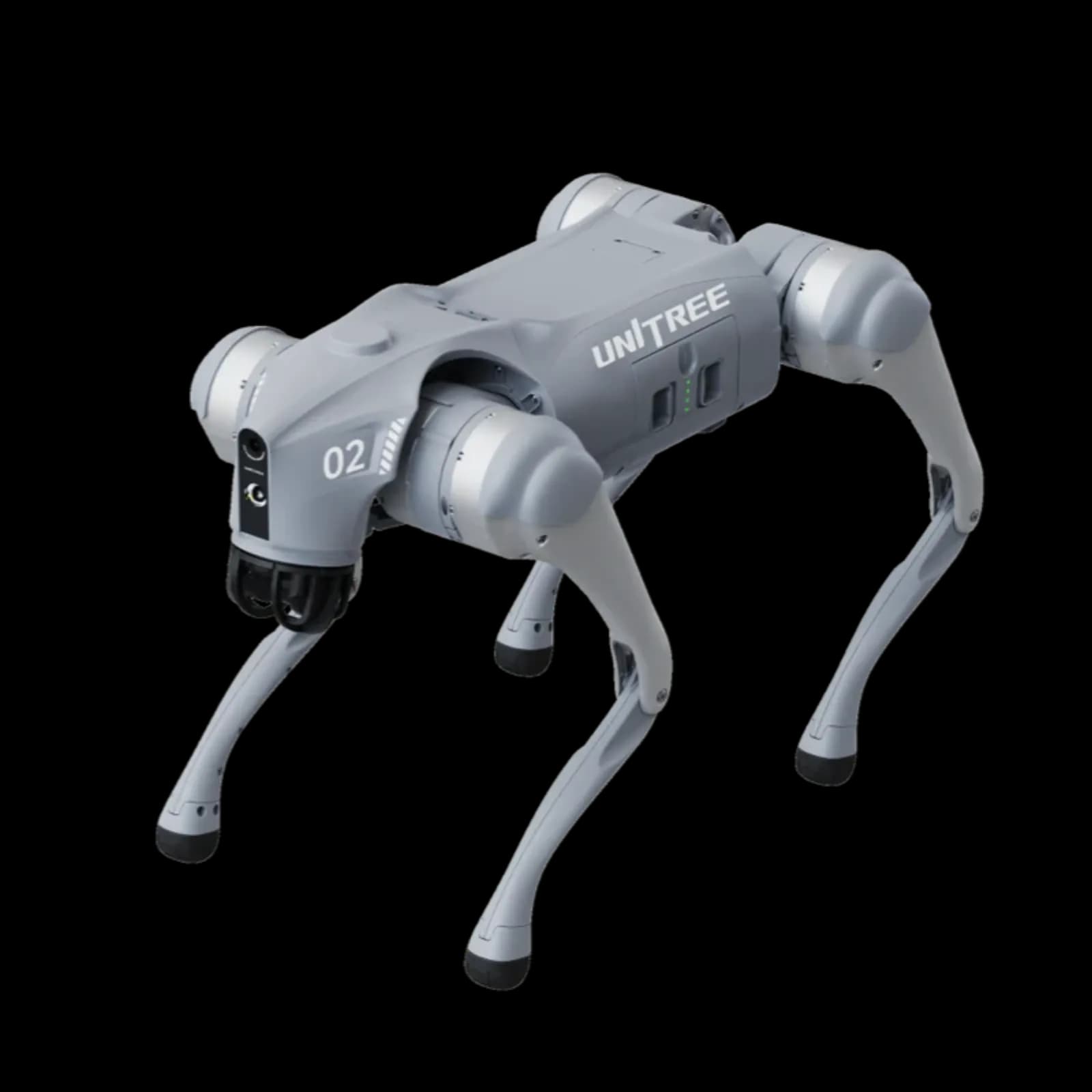
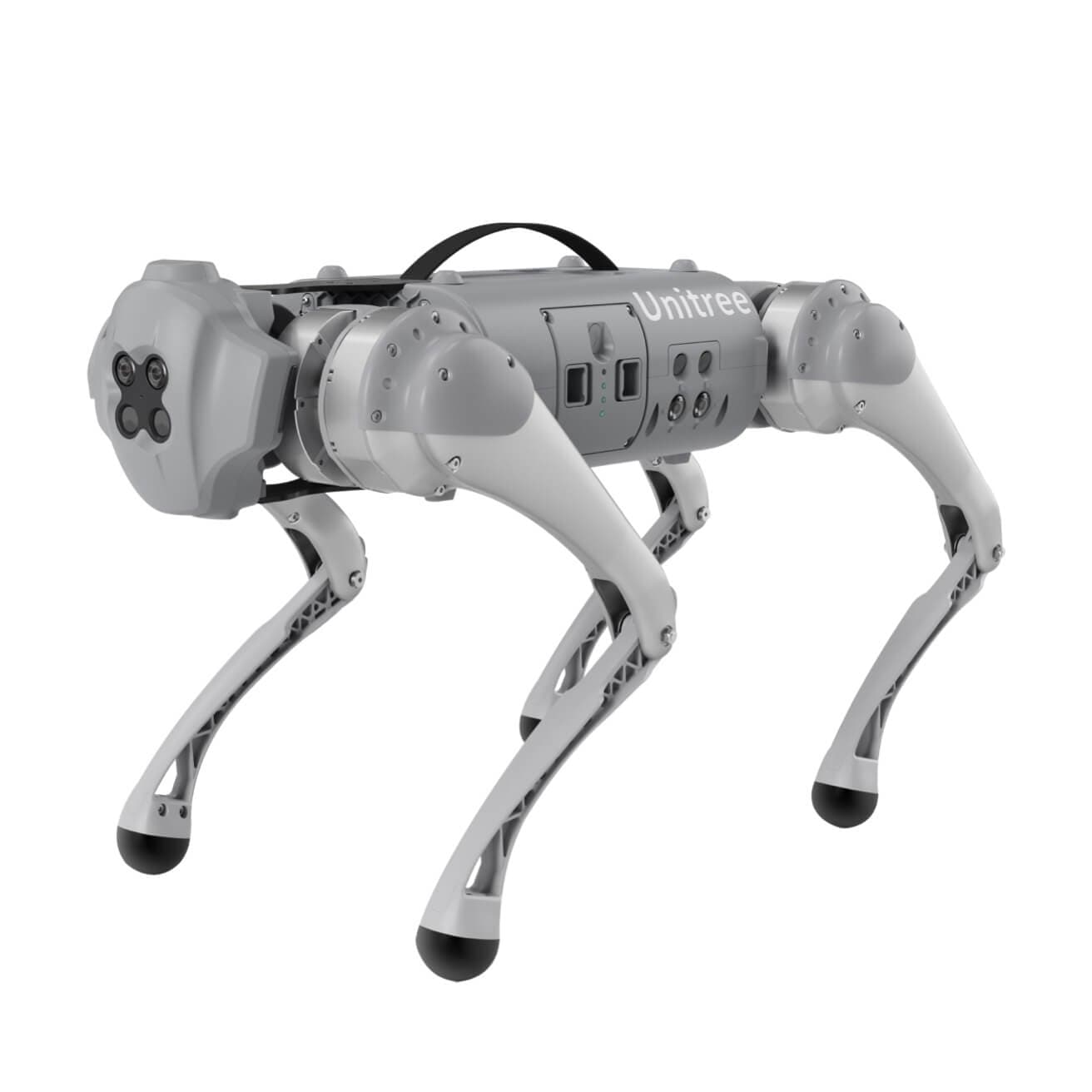
The Unitree Go1 is a bionic quadruped robot positioned as a consumer-level robot companion. It pairs a legged locomotion platform with onboard cameras and AI computing so it can perceive its environment and move alongside a person automatically.
Unitree offers the Go1 in multiple tiers spanning entry-level consumer use through to developer and education-focused configurations, broadening its appeal from hobbyists to researchers. Its intelligent side-following and multi-camera sensing systems are central to how it tracks and accompanies its owner.
The robot is sold directly through Unitree's official channels and is presented as a ready-to-ship product rather than a prototype, marking it as one of the company's accessible quadruped offerings.
RoboZaps maintains this record as part of its canonical robotics database. Specs are source-verified where linked; the record compares public facts across manufacturers rather than representing a single robot maker.
- Spec sources
- 2 linked
- Verification
- Partially verified · 9/13 specs source-verified
- Deployment
- Announced
- Last verified
- Jul 17, 2026
Key Features
- Intelligent side-follow system that lets the robot autonomously accompany a person
- Super sensory system using multiple fisheye/depth cameras for surround perception
- Onboard AI computing for body detection and recognition
- Legged quadruped locomotion capable of running movement
- Multiple version tiers spanning consumer, developer, and education use
Specifications
Grouped technical data with source detail available on demand.
15 documented values
Connectivity
| Communication | WiFi (standard); 4G optional (Edu)Manufacturer confirmedVerified Jul 6, 2026 Unitree Robotics |
|---|
Environment
| IP Rating | IP54 Unverified |
|---|---|
| Operating Temperature | -10°C to 45°C Unverified |
Mechanics
| Degrees of Freedom | 12Manufacturer confirmedVerified Jul 6, 2026 Unitree Robotics |
|---|---|
| Locomotion | QuadrupedManufacturer confirmedVerified Jul 6, 2026 Unitree Robotics |
Performance
| Max Speed | 3.7 m/sManufacturer confirmedVerified Jul 6, 2026 Unitree Robotics |
|---|---|
| Payload Capacity | 5 kgManufacturer confirmedVerified Jul 6, 2026 Unitree Robotics |
Physical
| Height | 400 mm Unverified |
|---|---|
| Weight | 12 kgManufacturer confirmedVerified Jul 6, 2026 Unitree Robotics |
| Width | 220 mm Unverified |
| Depth | 588 mm Unverified |
Power
| Runtime | 60 min Unverified |
|---|
Sensing
| Sensors | Stereo cameras, ultrasonic, foot force sensorsManufacturer confirmedVerified Jul 6, 2026 Unitree Robotics |
|---|
Software
| ROS Compatible | YesManufacturer confirmedVerified Jul 6, 2026 Unitree Robotics (GitHub) |
|---|---|
| SDK Support | YesManufacturer confirmedVerified Jul 6, 2026 Unitree Robotics (GitHub) |
Evidence & changelog
Sources behind this record and material corrections made over time.
Sources
- Unitree Robotics — cites Weight, Degrees of Freedom, Payload Capacity, Max Speed, Communication, Sensors, Locomotion
- Unitree Robotics (GitHub) — cites ROS Compatible
- Unitree Robotics (GitHub) — cites SDK Support
Media
Manufacturer
Chinese robotics company developing affordable quadruped and humanoid robots for consumer, industrial, and research markets.
- Headquarters
- Hangzhou, China
- Founded
- 2016